Get Full Government Meeting Transcripts, Videos, & Alerts Forever!
Get email alerts on the Continuity Of Care topic
No spam. Unsubscribe anytime.
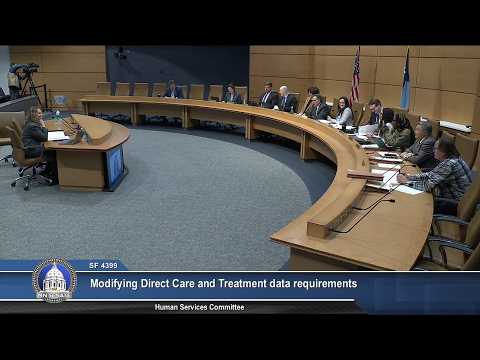
DHS leaders tell Senate panel they are trying to protect continuity of care while rooting out fraud; redacted report limits public detail
Summary
DHS Commissioner Shireen Gunn told the Senate Human Services Committee the agency is balancing program-integrity actions with efforts to keep Minnesotans’ services intact, describing targeted teams and a 60-day safe‑transition delay when payments are withheld. Senators pressed DHS over redaction of an Optum vulnerability report and asked for clearer counts and timelines for investigations.
Commissioner Shireen Gunn of the Minnesota Department of Human Services told the Senate Human Services Committee that the agency’s top priority is ensuring the people it serves have access to needed services while DHS pursues program‑integrity actions.
“At the end of the day, what’s most important for us is the outcomes of the people that we’re serving in Minnesota,” Gunn said, noting DHS must balance “rooting out fraud and making sure people have access to the services that they deserve.” (Commissioner Shireen Gunn)
Deputy Commissioner John Connelly described two operational teams intended to reduce disruption: a Regional Resource Specialist team that consults with county waiver case managers and a Complex Transitions team (about 1.5 FTEs) that directly assists with placements, housing searches and locating alternate providers when a payment withhold is imposed.
On the mechanics of payment suspensions, DHS described a deliberate “safe transitions” practice: when credible allegations of fraud trigger a payment withhold, DHS said it delays some enforcement steps for 60 days to give counties and case managers time to arrange placements or supports for affected individuals. DHS acknowledged the approach “isn’t perfect” and does not resolve every disruption.
Senators pressed DHS on transparency. Several requested access to an Optum vulnerability assessment and other internal reports; DHS said much of the material was redacted under the Minnesota Government Data Practices Act (chapter 13) or by third‑party redactions (Optum claimed trade secrets). Commissioner Gunn said DHS had shared an unredacted report with the governor and is willing to work with legislators on statutory guardrails that would allow more detailed sharing without exposing security vulnerabilities.
Lawmakers also sought counts and timelines. DHS said payment suspensions issued for credible allegations of fraud involved roughly 540 businesses in calendar year 2025; the agency reported about 66% of people in affected ICS apartments remained subject to payment withholds (about 174 individuals per DHS’s March 6 data collection snapshot) while about 35% (roughly 98 people) had been moved to alternate settings. DHS said recoveries over the past five years total about $50 million and that all payment suspensions based on credible allegations are referred to the Attorney General’s office.
Several senators contrasted short‑term operational fixes in a recent Tim O’Malley report with longer, structural proposals from the governor; DHS said it is reviewing both and aligning immediate, actionable items with CMS corrective actions and Optum‑identified vulnerabilities.
The committee did not take a final vote on the program‑integrity agenda items; members asked DHS for additional follow‑up data on referrals, adjudication timelines and the number of distinct provider entities currently under payment suspension.