Get Full Government Meeting Transcripts, Videos, & Alerts Forever!
Get email alerts on the Snap topic
No spam. Unsubscribe anytime.
Greater Chicago Food Depository warns SNAP changes could cost Illinois $800 million and jeopardize benefits for 2 million
Summary
Danielle Perry of the Greater Chicago Food Depository told Dolton residents that federal SNAP changes shift 15% of benefit costs to states (about $800 million for Illinois), impose new 80-hour work-reporting rules and could result in large benefit losses on May 1; she urged volunteering, outreach and advocacy.
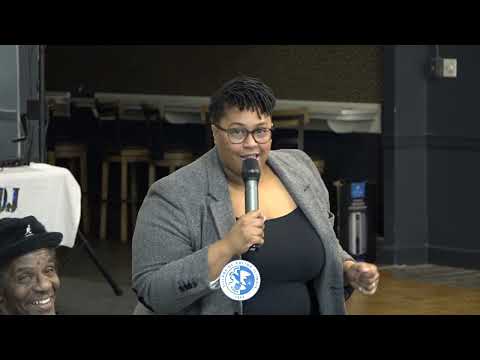
Danielle Perry, vice president of Policy, Advocacy and Community Engagement at the Greater Chicago Food Depository, told residents at a Dolton community meeting that a recent federal bill reduces SNAP funding and shifts part of the cost to states, potentially forcing Illinois to cover about 15 percent of benefits or risk eliminating benefits for approximately 2 million people in the state.
"It cut SNAP by $200 billion," Perry said, describing the legislation as designed to phase people off the program. She said Illinois currently receives about $4.7 billion in SNAP benefits annually and that the 15 percent state share the law creates would equal roughly $800 million a year.
Perry outlined an immediate change in work-reporting exemptions and enforcement: some exemptions — including the broadly used high-unemployment exemption — were removed at the end of the year, the state began counting hours on Feb. 1, and households can lose benefits if they are unemployed three months in a three-year window. "If they started looking in February ... You lose your benefits for the next 3 years," she said, warning that state estimates suggest "hundreds of thousands" may be cut off on May 1.
She explained the new 80-hours-a-month rule: SNAP participants must work, volunteer or be in an approved SNAP employment-and-training program for 80 hours monthly (or be on unemployment) to remain eligible. Perry emphasized that volunteering and approved training can qualify and urged community groups and churches to post volunteer opportunities so participants can meet the reporting requirement.
Perry said the Food Depository is preparing for likely demand increases by buying more food, offering weekly trainings for organizations to register volunteer opportunities, building a volunteer-reporting toolkit and recruiting "food rescue ambassadors" to coordinate donations from grocery stores. She named a state site, Galaxy Digital, where organizations can post volunteer opportunities so reported hours flow to the state system.
An audience question about parental exemptions prompted Perry to note a changed definition of dependent children: only households with a child under 14 remain automatically exempt from the work-reporting requirement, meaning parents of teens may now need to meet the 80-hour rule.
Beth Day Brown, a meeting attendee who identified herself during public comment, urged regulators to change donation liability rules so more edible grocery-store food could be directed to pantries instead of landfills. "So much of the food in our country is being thrown out in a dumpster behind the grocery store," she said, urging legislative change to enable more safe donations.
Perry described the Food Depository's "hub-and-spoke" rescue model, said rescue donations account for an estimated 25 percent or more of the agency's food, and invited residents to join trainings, recruit volunteers and take part in advocacy. She also urged residents to travel to Springfield to request emergency assistance funds for those who may be cut off in May and to pressure state leaders to identify revenue or budget choices to preserve the program.
Perry concluded by distributing a flyer with QR codes to join the Food Depository's advocacy team, and the meeting closed with applause.