Get Full Government Meeting Transcripts, Videos, & Alerts Forever!
Get email alerts on the Education Music topic
No spam. Unsubscribe anytime.
Mukwonago parents, students and teachers press board to preserve elementary band and orchestra
Summary
Dozens of community members urged the Mukwonago School District board to retain elementary instrumental music after staff proposed program changes tied to scheduling and a 2:1 secondary model; administration said funding would not be cut but that scheduling and staffing implications require master-schedule work.
Community members packed the Mukwonago School District board meeting to oppose proposed changes to elementary band and orchestra that would alter how fourth- and fifth-grade instrumental instruction is delivered.
Speakers at the citizens' comment period — including parents, students, alumni and former music educators — said early instrumental exposure builds musicianship and broader academic and social skills and warned that eliminating or restricting fourth- and fifth-grade access would weaken the pipeline into middle- and high-school music programs. "Removing band and orchestra programs from our elementary schools would take away from one of the most important entry points of music education," one parent said, arguing that early exposure underpins later achievement and belonging.
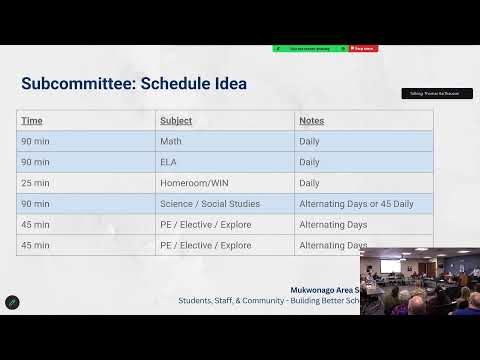
The administration presentation described two draft program models under consideration. One model would maintain fifth-grade band and orchestra during the school day but limit lessons to whole- or small-group instruction at lunch and recess; elementary music teachers would travel between schools and secondary music would move toward a 2:1 staffing model (two classes per teacher). A second model would run fifth-grade instrumental instruction as a before- or after-school club, which administrators said could be staffing neutral but might reduce participation because of scheduling conflicts.
Administrators Rachel and Angela, who presented the proposal and said the music department has developed metrics of success (student growth and learning, performance quality, engagement and program sustainability), emphasized that the district is not proposing a reduction in music dollars next year and estimated the district currently spends about $1.5 million on music. They cautioned that projected staffing impacts depend on how the master schedule is run and said that the lunch/recess model could range from staffing-neutral to requiring up to two additional full-time teachers depending on scheduling details.
Parents and students countered arguments for the changes with multiple examples of students who benefited from early music participation. An eighth grader who began playing viola in fourth grade said the early start enabled acceptance into the Milwaukee Youth Symphony Orchestra and growth that she credited to elementary music instruction. Alumni and a visiting alumnus who now works for a major orchestra in New York described long-term benefits, while other commenters pressed the board to identify administrative savings rather than cut student programs.
Several speakers raised concerns about transparency and data. Commenters asked for clear evidence that pull-out lessons are harming classroom learning and pressed for comparisons showing the district's program outcomes. One commenter cited an apparent increase in administrative positions and salaries in recent years and asked the board to prioritize student-facing programs rather than administrative growth. Administrators and board members acknowledged those concerns and said they will continue work with parent advisory groups and subcommittees; Rachel said the district will present refined metrics and scheduling analyses to the board and community before any final decisions.
The board did not vote on changes at the meeting. Administrators outlined next steps: additional subcommittee meetings, a parent advisory meeting on March 17, and further scheduling and costing work (including master-schedule runs) to determine whether proposed models can be implemented staffing-neutral. Board members asked administration to present options and the potential trade-offs — including what district programs would be affected if the board chose to preserve elementary instrumental instruction at current levels while closing other gaps in the budget.
The meeting closed its public-comment portion with repeated requests from residents for more transparent financial breakdowns and for the district to consider fundraising or reallocation alternatives rather than reducing elementary music access. The administration reiterated that no dollar reductions to music were currently proposed and that further details on staffing and schedule impacts would be shared at future meetings.
The next procedural steps are additional subcommittee work, the March 17 parent advisory session and a forthcoming board update with refined metrics and staffing scenarios.