Get Full Government Meeting Transcripts, Videos, & Alerts Forever!
Get email alerts on the City Budget topic
No spam. Unsubscribe anytime.
San Marcos council leans to keep tax rate near current level as staff warns of $4M FY2027 shortfall
Summary
City staff told the council the FY2027 general fund faces an estimated $4 million shortfall; after discussion members gave preliminary direction to staff to prepare a budget that keeps the tax rate near the current 65.15¢ level, holds the debt share at or below 30%, and includes a 3% COLA for non-civil‑service employees.
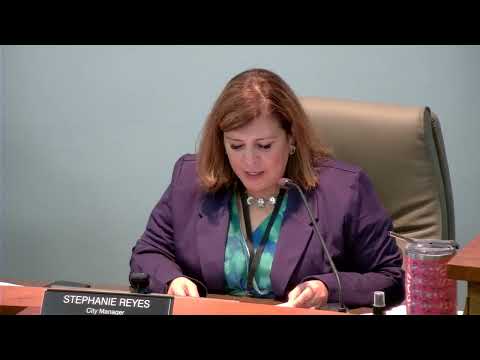
San Marcos City Manager Miss Reyes and Finance Director John Lockach told the City Council on Feb. 26 that staff’s preliminary FY2027 forecast shows a structurally unbalanced outlook and a general fund shortfall of roughly $4 million absent policy changes.
The workshop presentation walked the council through the calendar for this year’s budget process, the assumptions behind revenue projections and expense forecasts, and where pressure is greatest: a flattening of key revenue sources (property and sales taxes), rising personnel and benefit costs, expiring federal one‑time funding, and growing homestead exemptions. Lockach said property tax receipts are constrained because debt service and tax‑increment financing are set aside before the city receives operating dollars, and that recent reappraisals and lower new‑value additions make the city’s taxable value more sensitive to single large commercial projects.
Why it matters: City staff said the $4 million FY2027 gap is the baseline shortfall that shows up under conservative assumptions about property‑tax reappraisals and modest sales‑tax growth. At stake are decisions about service levels, staffing, and whether to use one‑time reserves, scale back programs, or adjust the tax rate.
Council direction: Councilmembers discussed three central policy tradeoffs — the overall tax rate band, how much of the tax rate to dedicate to debt service, and compensation for non‑civil‑service staff. After discussion a majority of councilmembers indicated they prefer preparing a budget that keeps the tax rate “between the current rate and the voter‑approval rate,” effectively keeping it near the current 65.15¢ level. Council also directed staff to maintain a debt component at or below 30% of the total tax rate and to include a 3% cost‑of‑living adjustment for non‑civil‑service employees in the baseline budget exercise so directors can develop budgets with that assumption.
What staff will do next: Staff will revise the budget policy statement for consideration in March and return detailed scenarios in the spring and summer once the preliminary property tax roll (due April 30) and other updated revenue information are available. The city manager emphasized staff still needs clearer direction in June–August to finalize rates and that April’s preliminary roll will materially affect whether revenue results match the assumptions presented tonight.
Context and constraints: Lockach emphasized the multi‑year nature of the problem — the forecast grows more adverse in later years if structural changes aren’t made — and noted some choices (for example, lowering the tax rate) would increase the multi‑year gap and force larger service cuts. He also reminded council that any tax rate above the voter‑approval rate would trigger an automatic election.