Get Full Government Meeting Transcripts, Videos, & Alerts Forever!
Get email alerts on the State Revenue topic
No spam. Unsubscribe anytime.
Committee advances HB 757, the revenue bill, with moratoria and new excises; members seek clarifications
Summary
HB 757, the annual revenue bill, includes moratoria on several local taxes (personal property, occupational, utilities), conformity changes with federal tax code, new excise taxes for data brokering and fantasy contests, and proposals affecting TIFs and EV charging station licensing; committee reported the bill to the floor after discussion.
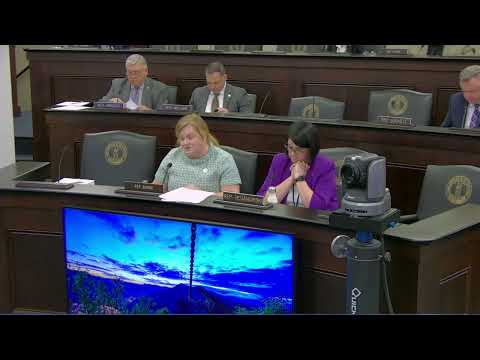
Chair Petri and bill sponsors summarized House Bill 757 during the March 10 committee meeting and described the bill as the year’s revenue and cleanup vehicle. The bill contains a range of provisions: moratoria on certain local levies (personal property, occupational and utilities), conformity and selected decoupling with federal tax law, new excise taxes and sales-tax coverage for emerging activities (data brokering, fantasy contests and predictive markets), EV charging-station annual licensing and inspection requirements, and measures that begin sunsetting or reviewing selected tax-expenditure programs.
Members asked detailed questions about how the bill would affect school finance mechanisms (nickels equalization), tax-increment financing (TIF) contracts and local school districts’ ability to levy occupational taxes. Sponsors explained that the moratoria do not affect real-property taxation; they described a 20-year stop on some equalization support to ensure equalization does not continue indefinitely after bonds retire. On TIFs, sponsors said the bill sunsets the program for future TIFs rather than retroactively cancelling existing active contracts.
Representative Bojanowski and others pressed for clarity and asked for follow-up discussion on decoupling choices with federal law; a member asked whether certain decouplings could increase state revenue without broad negative impacts. Sponsors encouraged members to work in the interim on further decoupling proposals and thanked the Department of Revenue for technical cleanup work.
HB 757 as amended by PHS1 and committee amendment was reported favorably (17 yes, 0 no, 3 pass) and will proceed to the House with committee recommendations. Committee members signaled follow-up conversations on school finance mechanics, TIF handling and premium-cigar taxation provisions tied to CPI adjustments.