Get Full Government Meeting Transcripts, Videos, & Alerts Forever!
Get email alerts on the Tax And Regulatory Reform topic
No spam. Unsubscribe anytime.
Committee advances HB 9, a sweeping rewrite of alcohol/substance taxes and rules after mixed public comment
Summary
HB 9 would replace product-specific excise schemes with unit-based taxes and new regulatory fees, add testing and licensing requirements, and toughen penalties for sales to minors; industry witnesses urged technical fixes and small-business owners warned of higher local consumer prices.
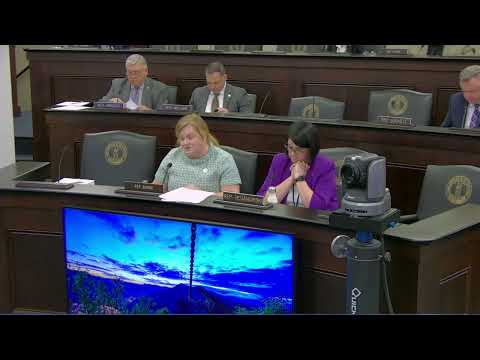
The committee spent an extended portion of its March 10 meeting on House Bill 9, a multipart measure that overhauls taxation and regulation for alcohol and certain regulated substances and establishes new testing and licensing requirements.
Representative Matt Cook, sponsor of the bill, told the committee the tax approach would move away from product differentiation and instead tax by the unit of the active substance (for example, alcohol by pure alcohol milliliters), a change intended to make the system simpler and quicker to adapt to novel products. The revised regulatory scheme also includes mandatory cannabinoid product testing at accredited laboratories, tighter local regulatory license standards and a new state-level 4% regulatory gross-receipts fee to help make the overall tax structure near ‘revenue neutral’ according to sponsors.
Industry testimony was mixed. Jim Hickden, co-founder of Cornbread Hemp, supported modernization but asked the committee for technical fixes: remove a duplicate wholesale/retail milligram fee, lower certain retail license fees (to align with existing alcohol fees), exempt non-intoxicating CBD products from cannabinoid fees, and standardize THC references to milligrams to avoid confusion. Hickden said: "We support HB 9 and appreciate work to modernize the regulated products tax scheme, but we ask you to fix duplicate fees and exempt non-intoxicating products."
Terry Elbond Jr., co-owner of the Crazy Fox Saloon in Newport, opposed the bill’s proposed tax shift, arguing it would ultimately raise costs for Kentucky consumers and threaten small businesses. He told the committee the excise tax has historically been folded into wholesale pricing and exported to out-of-state purchasers; shifting to a 4% point-of-sale regulatory fee will shift burden to Kentucky buyers, he said, urging the committee to vote no: "Please vote no on House Bill 9." Representatives acknowledged the concerns and said sponsors will continue stakeholder talks if the bill advances.
Committee members asked for clarifications about how taxes at the producer, wholesaler and retail levels would interact, local regulatory fee caps, and protections for small brewers and distillers. Representative Cook and other sponsors said the bill caps local regulatory fees (to 5% maximum in jurisdictions that currently levy higher percentages), allows jurisdictions to opt into a lower 1% regulatory fee if they previously did not adopt local fees, and ties premium cigar taxation to a CPI-adjusted flat amount comparable to neighboring states.
The committee adopted PHS1 on HB 9 and reported the measure to the House with a recorded committee vote of 15 yes, 3 no and 2 passes. Sponsors signaled continuing work with industry and local governments to refine technical language and fee structures ahead of floor action.
The committee record includes multiple requests for specific technical amendments that stakeholders want addressed before final House consideration.