Get Full Government Meeting Transcripts, Videos, & Alerts Forever!
Get email alerts on the Subcommittee Policy Revision topic
No spam. Unsubscribe anytime.
Policy subcommittee questions 60‑day deadline, moves to draft clearer subcommittee rules
Summary
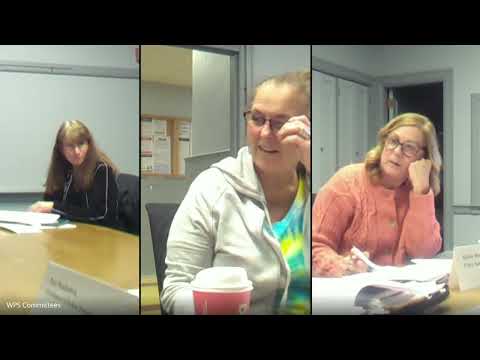
Warwick policy subcommittee members said the district’s 60‑day rule for subcommittee referrals is often impractical and agreed to draft consolidated policy language clarifying subcommittee types, membership and timelines; the draft will be circulated for editing and sent for a first read at the full school committee.
Members of the Warwick School Committee policy subcommittee spent the meeting reviewing an existing resolution that requires subcommittee matters to return to the full school committee within 60 days, and concluded that the timeline and several older policy provisions need updating.
Committee members said the 60‑day clock rarely allows enough time for drafting, administrative review, legal consultation and agenda posting. A subcommittee member noted that agenda items must be submitted to Teresa 48 hours before posting and that the compressed schedule often forces repeated redrafts and delays. Several members proposed either extending the period (for example to 90 days), requiring a 60‑day status update, or replacing the fixed deadline with a ‘‘timely fashion’’ standard that would allow necessary administrative and legal steps.
The subcommittee also reviewed older policy language (including a 1981 temporary‑committee policy and BCF guidance on advisory committees) and found overlapping and unclear terms for temporary, ad‑hoc and advisory subcommittees. Members recommended consolidating or removing outdated clauses so the policy clearly states: which subcommittees are mandatory (for example, health and the special education advisory committee), which are advisory, who may sit at the table, and what constitutes ‘‘favorable action’’ before a matter proceeds to the full school committee.
Several members compared the district’s practice to city council subcommittees, where a small panel discusses drafts and takes ‘‘favorable’’ or ‘‘unfavorable’’ action that is reported up to the full body. Participants agreed Warwick’s policy should mirror the practical flow—subcommittees draft and recommend, while the full school committee retains final approval—but should also clarify when subcommittees must provide interim updates to avoid items ‘‘sitting’’ indefinitely.
The group agreed on a process: a cleaned combined draft will be prepared, shared as a Google Doc for collaborative wordsmithing, and then submitted to administrative staff for inclusion on the full school committee agenda. Committee members asked that the draft be shared so members can propose edits before the packet is sent to Andrew and to Teresa for posting.
The subcommittee recorded a voice affirmation to proceed with drafting and circulation; the transcript does not record a roll‑call vote or named mover and seconder.
Next steps: the appointed editors will circulate the consolidated draft for comment, incorporate feedback, and send the cleaned draft for administrative review and agenda placement for a first read by the full Warwick School Committee.