Get Full Government Meeting Transcripts, Videos, & Alerts Forever!
Get email alerts on the School Redistricting topic
No spam. Unsubscribe anytime.
Pawtucket school committee delays vote on Cunningham closure, keeps ad hoc redistricting review active
Summary
After hours of public comment and committee questioning, Pawtucket school officials voted to take no closure action this year and directed the ad hoc redistricting committee to continue its review while staff supply more financial analyses and community outreach.
A divided Pawtucket School Committee on March 3 declined to approve any school closures tonight and instead extended the ad hoc redistricting review after hours of testimony from teachers, students and residents and a slide presentation showing large empty-seat imbalances across elementary schools.
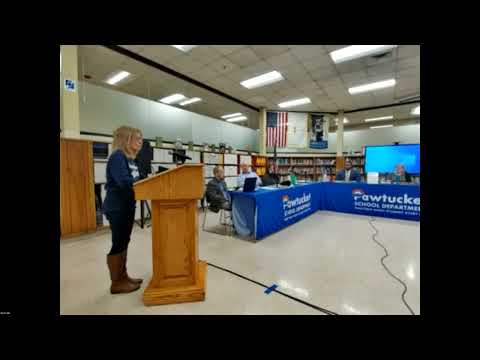
The meeting opened with several public commenters urging the committee to keep Cunningham Elementary open. "School closures should not be undertaken to fix a budget deficit," a Cunningham teacher told the committee, arguing that keeping neighborhood schools operating preserves community ties. Julia Sharpentier, an MLL resource teacher with 39 years at Cunningham, read students' statements and said "it is more than a building. It is a legacy," asking members to consider the school's role for families.
Administrators presented the redistricting scenarios and utilization data the ad hoc committee reviewed. The district's presenter said the analysis was grounded in the master planner's report and showed many elementary campuses operating well below an ideal 5–15% empty‑seat range; Baldwin, Winters, Varia and Curtis were cited as having especially high empty-seat rates. Officials emphasized the methodology sought to balance class-track structures and account for special programs such as dual-language and inclusion classrooms.
Fiscal context framed much of the debate. Superintendent Buck said the district is projecting a $7.9 million structural deficit; administrators told the committee that a single-school closure (as in the scenario studied for Cunningham) was expected to provide about $1.5 million in recurring savings, but that the closure alone would not erase the projected shortfall.
Board members and the public questioned both the choice of Cunningham for closure consideration and the process. "We are down by 3,000 students," board member Mr. Olden Hayne said, arguing the district must make hard choices. Other members urged a more deliberative timeline with clearer cost and savings analyses, transportation modeling and community outreach before any vote to close a school.
Town counsel outlined the statutory timeline for a permanent school closure, reminding the committee that any hearing must be held no more than six months and no less than 45 days before a proposed closing date — meaning that procedural timing matters for any recommendation to advance.
After discussion the committee approved a motion to take no action on closures for this year and directed the ad hoc redistricting committee to continue its work and return with more detailed analyses and outreach plans. The motion passed with members agreeing to keep the redistricting review active while staff develop the financial, transportation and community‑engagement materials requested by the committee.
What happens next: the ad hoc committee will meet again, staff will deliver requested cost/savings estimates and transportation analyses, and the district will schedule public hearings and community outreach consistent with the statutory timeline if a closure recommendation is later advanced.