Get Full Government Meeting Transcripts, Videos, & Alerts Forever!
Get email alerts on the Accessory Dwelling Units topic
No spam. Unsubscribe anytime.
Select Board backs compromise ADU bylaw to send to Town Meeting
Summary
After extended negotiation between planning staff and petitioners, the Select Board voted to forward an amended version of Warrant Article 15 (accessory dwelling units) that narrows some staff proposals and adopts several protections for abutters while allowing many detached and converted ADUs to proceed.
The Brookline Select Board voted Nov. 4 to send an amended version of Warrant Article 15, the town's proposed accessory dwelling unit (ADU) bylaw, to the 2024 Town Meeting after weeks of negotiation between petitioners and planning staff.
The board’s motion, made by Select Board member Paul Warren, adopted a compromise largely aligning staff drafting with changes proposed by petitioners Dick Bena and Roger Blood. Planning Director Cara Brutin summarized the balance the group sought: “when the state passed this law this summer ... they decided very intentionally to put that language in section three ... the state did intentionally put accessory dwelling units into the section three” of the zoning act, she said, and the town needed rules that comply with that state framework while addressing local concerns.
Why it matters: The state affordable‑homes law broadly allows ADUs; Brookline’s draft layers local limits (floor‑area caps, setbacks, footprint rules and a five‑year existence requirement for conversions) meant to preserve neighborhood character, reduce demolition pressure and protect tree canopy. Petitioners argued the compromise preserves incentives to convert existing garages and carriage houses into housing rather than encouraging demolition.
What the compromise does: Under the motion the board approved, the bylaw would allow ADUs where single‑family uses exist but apply a 130% maximum floor‑area cap (eliminating properties already built beyond that threshold from permissive ADU eligibility). The compromise sets minimum by‑right setbacks but retains a special‑permit path; it prohibits the Zoning Board of Appeals from granting extreme setback relief to the point of zero setback, and it requires certain protections for abutting properties (limits on long, unbroken facades facing a neighbor and translucent/non‑operable windows where an ADU sits within a close distance to a property line unless building code requires otherwise). Petitioners argued the larger setbacks in their substitute would better protect privacy and tree canopy; Dick Bena said the substitute “offers a more user‑friendly and yet scale‑appropriate living and design option” for occupants and neighbors.
Legal and implementation notes: Town Counsel Jonathan Simpson cautioned that strict by‑right setbacks may be successfully challenged in some individual cases and that broader special‑permit relief can channel disputes to a public hearing process that lets neighbors and the town negotiate conditions. He said some lots likely would present circumstances in which courts could find a particular regulatory outcome unreasonable, but that individualized challenges would be the exception rather than the rule.
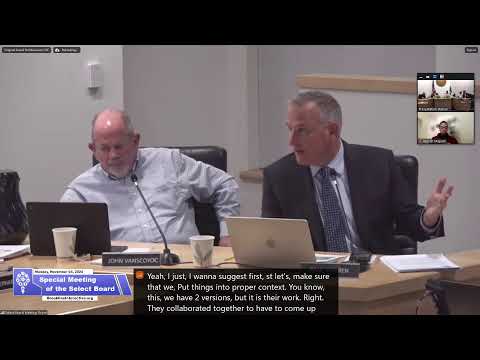
Board reaction and vote: After discussion, including detailed slide examples from the planning department and repeated emphasis on encouraging conversions of existing accessory structures rather than demolition, the Select Board voted to move favorable action on Article 15 as amended by the petitioners’ substitute. The board recorded affirmative votes from John Vanak, Michael Sandman, Paul Warren, David Croman and Chair Bernard Green.
Next steps: The amended Article 15 will appear in the combined reports and proceed to Town Meeting for debate. Advisory committees will have their remaining meetings before Town Meeting; the Select Board and planning staff said they will monitor early conversions and be prepared to revisit rules if patterns of unintended consequences emerge.