Get Full Government Meeting Transcripts, Videos, & Alerts Forever!
Get email alerts on the School Resource Officers topic
No spam. Unsubscribe anytime.
Brookline Select Board urges School Committee to consider reinstating school resource officers after contentious hearing
Summary
After a public hearing that drew supporters and opponents, the Select Board voted to request the School Committee recommend reinstatement of a School Resource Officer program for middle and high schools under a memorandum of agreement as required by state law.
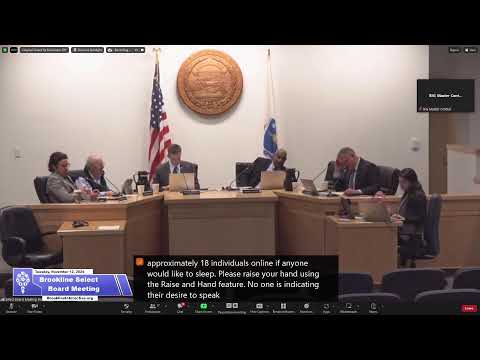
The Brookline Select Board on Nov. 12 urged the School Committee to consider reinstating a School Resource Officer (SRO) program at the middle and high schools, following a public hearing that drew dozens of residents and vocal testimony on both sides.
At the hearing, Police Chief Jen Pastor described the SRO program as a relationship-based, preventative effort that formerly placed trained officers in schools to build trust with students, provide classroom instruction on topics such as cyber safety and substance misuse, and offer alternatives to arrest. “One of the most vital functions of our SRO program was the relationships that officers built with our students and our staff,” Chief Pastor said, arguing the absence of SROs has removed informal, early-warning conversations and diminished options for noncriminal interventions.
Opponents, including Rul Fernandez, who said he chaired Brookline’s reimagining-policing task force, urged caution and criticized the process for what they described as limited prior public engagement. “There was a very thoughtful months-long process” before SROs were eliminated in 2021, Fernandez said, and his organization submitted letters and asked the board to pause any reinstatement efforts.
The hearing followed remarks from school principals and other educators, who told the board that some school leaders want officers back because they missed the day-to-day partnership and wraparound services SROs provided. Several residents and former SROs also testified in support; former SRO Debbie Hatsy described daily interactions with students and said the role focused on mediation and relationship-building rather than arrests.
Board members debated the scope and wording of a proposed resolution. Several members said they wanted a mechanism that would restore the services previously provided while addressing community concerns about uniforms, office location and the officer role in discipline. Select Board member Paul Warren urged the public to view the program’s purpose as broader than active shooter response, saying it centered on early intervention and alternatives to criminalization.
Chair Bernard Green moved a resolution asking the School Committee to vote to recommend to the superintendent that the SRO program be reinstated in the high school and middle schools pursuant to a memorandum of agreement as required by Chapter 71, Section 37P of the Massachusetts General Laws. The Select Board voted to approve the resolution; the board’s packet notes that the memorandum of agreement required by the statute defines roles, responsibilities and limitations for school-based officers.
The resolution asks the School Committee and superintendent to negotiate a memorandum that addresses many of the community’s concerns — including SRO training, the role of SROs in disciplinary matters, office location and community oversight — and to return to the Select Board and public with details. Chief Pastor recommended a phased, collaborative approach: spending the remainder of the school year and next summer working with school staff and community members to resolve concerns and prepare an agreement.
What happens next is procedural: Massachusetts law identifies the superintendent and school committee as central to SRO appointments, and reinstating the program will depend on the superintendent’s agreement with the police chief, a School Committee vote and appropriation where required. The Select Board’s action is a formal request and does not itself reinstate SROs.
The hearing drew broad public engagement, with roughly 45 minutes of organized public comments alternating between pro and con speakers. Several community organizations submitted letters opposing reinstatement; other speakers, including school staff and town meeting members, urged its return as a tool for prevention and relationship-building.
The Select Board said it will forward the hearing record and its resolution to the School Committee and superintendent for their consideration. The board recorded the vote in its minutes; the resolution will also be distributed to the police chief and posted to the town-meeting members list.