Get Full Government Meeting Transcripts, Videos, & Alerts Forever!
Get email alerts on the Housing topic
No spam. Unsubscribe anytime.
Mercer Island study session details upzones, inclusionary rules and how a fee-in-lieu could fund housing
Summary
City staff and consultants told the council that a two-phase compliance strategy with the Growth Management Hearings Board order will pair limited upzones around town center with inclusionary zoning and a fee-in-lieu program; consultants said a hypothetical $30.7 million in fees could leverage roughly 170—200 affordable units depending on assumptions.
City staff and a consultant on March 3 walked Mercer Island's City Council through how a combination of zoning changes and a fee-in-lieu program could help close the city's estimated affordable-housing gap.
Deputy Director Alison Vancorp summarized the Growth Management Hearings Board order that requires the city to act on four topics — land capacity, "adequate provisions," a station-area subarea plan and anti-displacement policies — by July 31, 2026. She described a two-phase approach that focuses near-term changes in and adjacent to Town Center and delays amendments elsewhere until required by 2029.
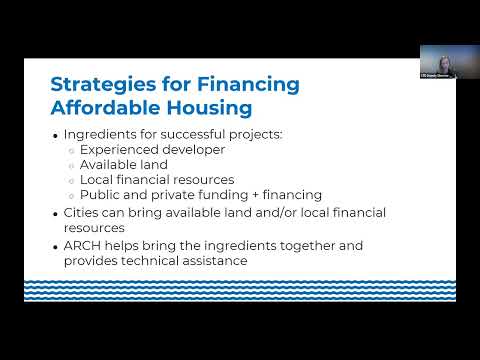
Consultant Elliot Weiss of Community Attributes described the mechanics of a fee-in-lieu program: developers may either build required affordable units on-site under an inclusionary policy or pay a fee that goes into a housing fund. "The developer pays the fee and those dollars from the housing fund are dedicated to an affordable-housing developer," Weiss said. He explained that those public dollars are then leveraged with loans, tax credits and other sources to fund a larger total development cost.
Weiss presented staff's analysis showing a current deficit of 519 units at 0—50% of area median income, concentrated at 0—30% AMI. Using ARCH's development-cost assumptions ($425—$500 per square foot) and standard unit-size estimates, the consultant estimated a per-unit development cost of roughly $510,000—$600,000 and total direct-delivery cost of about $265—m to $311—m. He said a hypothetical fee-in-lieu program that produced $30.7 million could, under 65—75% loan-to-cost leverage assumptions, support construction of roughly 170—200 units.
"This is the concept of leverage where we take a certain number of dollars generated through the fee-in-lieu and we magnify the impact of that by partnering with an affordable housing developer," Weiss said.
Council members pressed for Mercer Island-specific cost assumptions and for clarity on whether a fee would move deficits between income bands. Council Member Reynolds asked whether the $425—$500/sf assumption accounts for Mercer Island land prices; staff said that Arch's range reflects other Eastside cities and that a Mercer Island-specific land-price analysis is on the to-do list.
Staff also flagged trade-offs: the analysis modeled both an upzone option (Town Center to eight stories, adjacent multifamily to six) and inclusionary rates (staff noted a modeled change from a 15% requirement to a 10% requirement at 50% AMI in one scenario). Vancorp said exact code language and fee levels remain to be drafted, and staff emphasized that the March session was a technical follow-up rather than a final proposal.
What's next: staff plan additional analysis on local land costs and loan sensitivity and will return with draft code and fee proposals as part of the Growth Management Act compliance work this spring.
Sources: Deputy Director Alison Vancorp; CBD Director Jeff Thomas; Elliot Weiss, Community Attributes.