Get Full Government Meeting Transcripts, Videos, & Alerts Forever!
Get email alerts on the Affordability topic
No spam. Unsubscribe anytime.
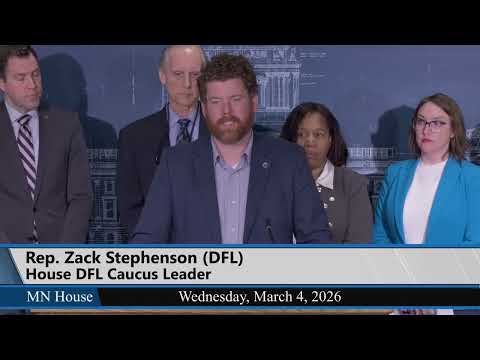
House DFL outlines affordability package targeting health care, child care, energy and housing
Summary
House DFL representatives unveiled a multi-part affordability package that includes proposals to reform health care toward a universal model, expand affordable child care and Pre-K, curb grocery surveillance pricing, increase energy-assistance funding and restrict private-equity purchases of single-family homes; they said funding options include new revenue from the wealthy and large corporations.
House DFL lawmakers on Thursday unveiled an affordability package they said would tackle rising costs for Minnesota families by addressing health care, child care, grocery pricing, energy bills and housing.
Representative Berman, speaking first, framed health-care costs as a system that "doesn't make sense for anyone but the people who profit off of it," and urged structural reforms. "We need a health system, not an insurance system," Berman said, arguing that layers of administration — including pharmacy benefit managers and insurers — are driving up copays, out-of-pocket costs and premiums and worsening emergency-room use.
The caucus said it will pursue bills to advance a more universal system and to rein in the administrative practices they say increase costs. The lawmakers argued those changes are part of a broader affordability strategy that also addresses housing, child care and energy.
Carlie Kotyza‑Witthuhn, DFL chair of the House Children and Families Committee, pressed for expanded child care and Pre-K, calling child care "next to impossible" to afford for many families. She also described a proposal to curb grocery "surveillance pricing," saying bills would bar some uses of personal data in individualized pricing, require disclosure when stores use facial-recognition technology, and limit how often electronic shelf prices can change to prevent surge pricing.
"This feels like something we should all be able to agree on," Kotyza‑Witthuhn said, adding that retailers told her many of these practices are not yet widespread in Minnesota but that corporate investment in the technology is growing.
Representative Patty Acomb, co-chair of the House Energy Committee, outlined energy-related proposals and data on household distress: she said only one in five eligible Minnesotans receives energy assistance, Minnesotans were collectively more than $129 million past due on gas and electric bills as of January, and she cited nearly 100,000 households experiencing shutoffs in 2024 and 2025. The DFL plan would increase funding for low-income energy assistance, expand weatherization and limit utilities' ability to pass some corporate costs to customers, the caucus said.
A Minneapolis representative described housing as a major driver of household budgets and estimated Minnesota is missing close to 100,000 housing units. The speaker said 48% of renters and 20% of homeowners are overburdened (paying more than 30% of income for housing), gave state and Twin Cities median prices ($355,000 statewide, $390,000 in the Twin Cities), and proposed restricting private-equity firms from buying single-family homes as one tool to improve affordability.
DFL speakers tied the proposals to a broader budget discussion, saying recent state revenue gains have disproportionately benefited high-income residents and corporations and that lawmakers should consider revenue from those who benefited most from recent federal tax changes. Asked how the caucus would pay for specific proposals, presenters said they will review the budget comprehensively and consider new revenue rather than across-the-board cuts.
Lawmakers answered questions about the surveillance-pricing bills and enforcement but did not propose any final tax or spending votes at the event. The caucus said it will introduce legislation and continue discussions on revenue and budget trade-offs in committee.