Get Full Government Meeting Transcripts, Videos, & Alerts Forever!
Get email alerts on the Audit Dnr Outdoor Heritage topic
No spam. Unsubscribe anytime.
Legislative auditors: DNR 'generally complied' but documentation and monitoring lapses found in Outdoor Heritage Fund grants
Summary
A Legislative Auditor performance audit found the Department of Natural Resources largely met tested requirements for Outdoor Heritage Fund grants but identified shortcomings: incomplete invoice detail, payments made without required progress reports and untimely closeouts. DNR pledged policy updates and staff training.
The House Legacy Finance Committee heard on Thursday that a performance audit of the Department of Natural Resources’ management of Outdoor Heritage Fund grants found overall compliance in tested areas but also two notable problem areas: insufficient documentation for some reimbursements and weaknesses in monitoring and closeout practices.
Deputy Legislative Auditor Lori Liason opened the presentation, saying the audit focused on DNR oversight of legislatively named grants. Ryan Baker of the Office of the Legislative Auditor’s Financial Audit Division summarized the work and findings, noting the audit reviewed 13 grant agreements and examined grant awards and payments, fiscal records, monitoring and closeouts.
Baker said the auditors concluded that “DNR generally complied with the criteria that we tested,” but identified two findings. First, the audit found that invoices submitted by three grantees “did not contain enough detail to determine whether the expenses were allowable,” and that DNR paid about $5,000 to two grantees without detailed documentation supporting the reimbursements. Second, the auditors documented monitoring shortfalls: DNR made payments totaling $2.1 million to some legislatively named grantees and $2.7 million to three single-source grantees without having current progress reports on file, and several closeout evaluations were completed hundreds of days after final payment.
The audit also reported that some closeout evaluations were missing required elements — such as whether risks or unresolved issues existed and assessments of timeliness and quality — and that DNR’s policies did not define certain terms, including what constitutes allowable labor costs or the phrase “directly related and necessary.” The auditors recommended DNR obtain adequate documentation for costs, coordinate with the Outdoor Heritage Council to clarify allowable activities and costs, conduct timely monitoring and closeouts, and strengthen internal controls.
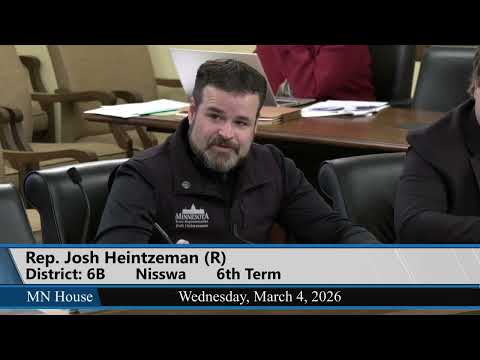
Legislators pressed the auditors and DNR officials about the practical meaning of “generally complied.” Representative Paul Heintzeman (spoken in the hearing as Representative Heintzeman) asked whether the phrasing understated the significance of the findings and whether payments were made before work was complete. Baker said auditors found one advance payment in the sample but did not identify widespread prepayments; he added that many projects take multiple years and auditors sample completed or nearly completed grants.
Legislative Auditor Judy Randall told members the problems documented were real but not on the scale the office has seen at some other agencies. Randall highlighted a new annual update process — added to state law last year — that requires the Office of the Legislative Auditor to track implementation of recommendations over the past five years and report back, a change she said will help lawmakers follow agency corrective actions.
Assistant Commissioner Bob Meyer and Chief Financial Officer Mary Robeson of DNR told the committee the agency accepts the findings and has scheduled policy and training updates. Meyer pointed members to a corrective-action timeline in DNR’s written response, including planned updates to the pass-through grants manual (targeted for June 30, 2026), new internal payment checklists and expanded training for staff and grantees. Robeson said DNR will work with the Outdoor Heritage Council to refine guidance about allowable costs and will revise sampling documentation and closeout procedures.
On monitoring and site visits, DNR staff said the agency uses sampling for monitoring large portfolios of linked, multi-year grants (some grantees hold dozens of open awards) and that sampling methodology and documentation will be strengthened so the agency can demonstrate how it selected grants for oversight. DNR officials emphasized that final payments are not made until monitoring and final reports show work is complete; closeout evaluations serve as a record for future grant decisions.
Lawmakers said they want enforcement of existing rules and more consistent documentation rather than new statutes. Representative Lillie asked whether the findings reflected fraud; auditors said they found no indicators of fraud in the sampled grants. Several members flagged related programs — especially smaller community grants and grants under $50,000 — as areas to watch as new programs are rolled out.
Next steps: auditors will continue periodic follow-up testing as authorized by statute and DNR said it will implement the corrective actions listed in its response. Committee members noted the Environment Committee planned to discuss related community grant programs and said they would monitor DNR’s implementation of the fixes.
The committee also received DNR assurances that most corrective steps would be in place before FY27 grants are rolled out.
Ending: The committee thanked auditors and DNR officials for the presentation and indicated they would continue oversight and follow-up through legislative channels and forthcoming update reports.