Get Full Government Meeting Transcripts, Videos, & Alerts Forever!
Get email alerts on the Public Health topic
No spam. Unsubscribe anytime.
Rhode Island health officials to test stocked trout for PFAS at Melville Ponds; council approves study
Summary
The Portsmouth Town Council unanimously approved a Rhode Island Department of Health-led study to measure PFAS uptake in stocked trout at Upper Melville Pond. State agencies and EPA will run a multi-point sampling schedule this spring and summer to guide potential changes to stocking and public advisories.
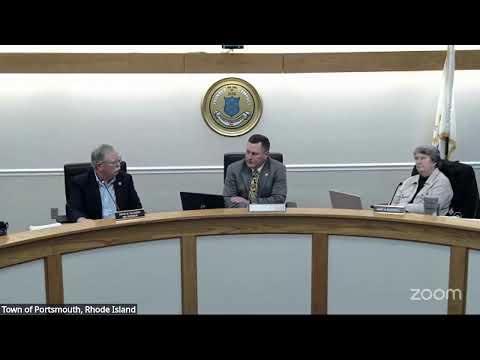
The Portsmouth Town Council voted unanimously to allow the Rhode Island Department of Health to sample stocked trout at Upper Melville Pond in a study designed to measure how quickly PFAS accumulate in fish.
Dr. Zach Shepard, principal environmental health risk‑assessment toxicologist at the Department of Health, told the council the move responds to state surface‑water testing that found elevated PFAS concentrations in the Melville ponds. "PFAS are man‑made chemicals that are designed to repel both oil and water. They remain in the environment for a really long time — they're called forever chemicals," Shepard said, explaining the health concerns linked to long‑term exposure.
The multi‑agency project — led by RIDOH with the Department of Environmental Management, Roger Williams University and EPA participation — will collect fish, water and sediment at scheduled intervals to quantify uptake. The proposed sampling schedule calls for a time‑zero sample (fish tested prior to stocking), then collections at roughly two, four and six to eight weeks after fin‑clipped trout are introduced; the team expects to collect about 20–25 fin‑clipped fish at each sampling point. Shepard said the study is intended to inform how the state manages stocking schedules and signage so people can continue to fish safely.
Council members pressed for operational details: how the project will distinguish recently stocked fish (DEM will fin‑clip supplemental stock to mark them), how harvested fish will be collected (DEM’s electrofishing boat at night) and how the town will help (snow fencing, signage). Shepard said EPA will provide analytical support, DEM will assist with stocking and harvest logistics, Roger Williams will process samples prior to lab analysis, and RIDOH will coordinate and conduct the health risk assessment. He estimated results and analysis will be available next year.
Town Administrator Mr. Rainer confirmed the town will support temporary signage and provide snow fencing around the pond for the sampling period. After discussion, the council approved the motion to permit the study — scheduled to run from May through July with results expected the following year — on a 7–0 vote.
Next steps: state partners will coordinate final sampling logistics with town staff, erect signage for anglers if needed, and report back to the council and the public when analysis is complete.