Get Full Government Meeting Transcripts, Videos, & Alerts Forever!
Get email alerts on the Tif Infrastructure topic
No spam. Unsubscribe anytime.
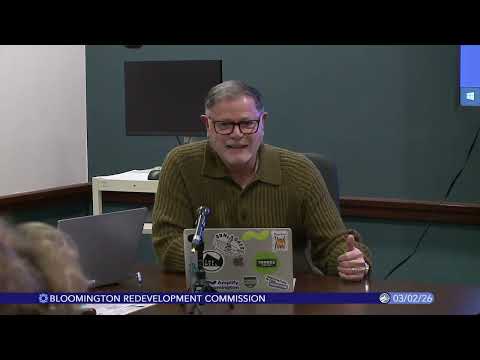
Redevelopment commission designates Summit District EDA, approves design agreement for Sudbury and Adams roads
Summary
The commission approved Resolution 26-17 to declare the Summit District an Economic Development Area and start a residential allocation area for Shasta Meadows, and later approved Resolution 26-20 to fund design of Sudbury and Adams roads using a portion of a $5 million earmark; the Sudbury partners will donate right-of-way and land for a neighborhood fire station. Votes: 26-17 passed unanimously; 26-20 passed 4-0-1 (one abstention).
The Monroe County Redevelopment Commission voted March 2, 2026 to create a Summit District Economic Development Area and begin an allocation area for Shasta Meadows, part of a multi-phase effort to spur residential development and fund necessary infrastructure.
City legal counsel Dana Kerr explained the mechanics and rationale behind the declaratory resolution (Resolution 26-17). "What you do when you create a TIF is you establish the base assessed values," Kerr said, describing how incremental increases in assessed value can be captured to pay for project costs tied to the allocation area. He explained differences between residential and commercial TIF structures and described why Shasta Meadows was proposed as the first allocation area within the Summit District.
Kerr and staff emphasized that the declaratory resolution is a statutory first step: after the RDC passes it the plan commission and common council will review the plan and a public hearing will follow before final confirmation. Kerr confirmed that, if passed this calendar year, the baseline date for Shasta Meadows would revert to Jan. 1 of this year.
Commissioners pressed for details on revenue and sequencing. Staff said precise revenue estimates depend on final platting and development plans, so blanket figures are not yet available. Staff also explained that the RDC intends to use TIF funds primarily for infrastructure tied to development, citing Adams and Sudbury roads as critical connectors. "Without this...infrastructure development, Shasta Meadow couldn't develop," Kerr said.
During Q&A, commissioners identified a presentation-versus-exhibit labeling inconsistency: slides shown labeled the parcel as TIFF area 1 while the official resolution exhibit labels it TIFF area 5. Staff confirmed the legal designation follows the resolution and its attached exhibits and asked that presentation materials be corrected for consistency.
After public comment (none provided), a motion to approve Resolution 26-17 passed by roll call: Steve Scamaleri: yes; Randy Casty: yes; John West: yes; Lori McRabie: yes; Deborah Meerson: yes (unanimous).
The commission then took up Resolution 26-20, an agreement with Sudbury Development Partners LLC to begin design work for Sudbury and Adams within the Summit boundary and to establish a process by which Sudbury would oversee fieldwork while city engineering sets design standards and approves vendors. Staff said the design estimate for the two roads is on the order of $1 million and that the RDC would use roughly that portion of a previously earmarked $5 million for design and planning. The agreement includes a donor commitment from Sudbury Development Partners to convey right-of-way needed for the roads and donate land for a neighborhood fire station once design and location are finalized.
Staff also noted a potential external funding source: a pending Ready 2.0 grant (about $4 million) intended to support sewer infrastructure and lift-station upgrades; that grant remained under review and its final terms were not yet executed.
After discussion about vendor oversight, local participation and funding sequencing, the RDC voted on Resolution 26-20. The roll call recorded one abstention: Randy Cassie abstained, citing an ownership interest that could create a conflict; other members voted yes. The motion passed with four yes votes and one abstention.
Staff and legal counsel said the actions on March 2 set a framework for subsequent steps: plan commission and council review, detailed engineering design contracts returning to the RDC for approval, and later consideration of bonding or other financing once construction costs are known.