Get Full Government Meeting Transcripts, Videos, & Alerts Forever!
Get email alerts on the Governance topic
No spam. Unsubscribe anytime.
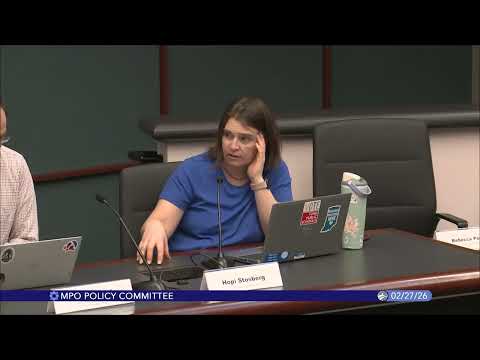
Monroe County MPO members debate updating 1982 interlocal agreement; vote to add item to agenda
Summary
Committee members debated whether to pursue a new interlocal agreement to clarify roles and responsibilities after staff noted the 1982 letter that set up the MPO contains ambiguities; members asked for legal review but a motion for an immediate special session with city and county counsel failed, leaving the issue on next month's agenda.
Scott Ferris, a member of the Monroe County Plan Commission, moved early in the meeting to add a discussion about a new interlocal ("interoperative") agreement for the Bloomington–Monroe County urbanized area to the agenda.
Ferris said the MPO’s founding paperwork from 1982—used to place the MPO under the City of Bloomington Plan Commission as the contracting agency—contains a sunset clause and lacks clear assignment of roles and responsibilities. "You have to have an agreement that you reference before you have a plan," Ferris said, urging an updated document that clarifies who does what.
MPO staff told the committee the 1982 arrangement remains in effect and that federal funds currently flow under that framework. "If it was not in effect, we would not be receiving federal funding to this day," MPO staff said.
That tension—between a 40‑year‑old written arrangement and practical governance—dominated the discussion. Commissioner Thomas, who identified himself as a county commissioner, said county leaders have discussed the issue internally and raised concerns about staff supervision and the perception that MPO staff answer primarily to the city. "This is something we've been talking about internally for a bit," Thomas said, urging that Ellletzville, Indiana University and other partners be included in any conversation.
Members proposed a range of next steps: a legal review by city and county attorneys, a working group, postponing changes until after the UPWP process, or drafting a new interlocal agreement. Several speakers pressed for an attorney’s interpretation of the founding documents before deciding whether to seek a replacement agreement.
Scott Ferris moved that the offices of the mayor and the county commissioners prepare a new interlocal (or interoperative) agreement with city and county legal counsel leading the effort and presenting the result to the MPO Policy Committee. That motion was discussed but later amended in practice to call for a special session that would convene city and county counsel to report back.
The proposal for an expedited special session—sponsored to obtain legal analysis and speed clarity—failed on a roll call vote. Members opposing a near‑term special session cited scheduling constraints for legal staff and warned that reorganizing MPO governance immediately could delay or endanger federal funding tied to the UPWP and TIP approval process.
Because the special‑session motion failed, committee leaders left the interlocal matter on the agenda as old business for the next meeting and urged staff and members to gather legal questions and source documents in advance.
What's next: the item remains on next month's agenda, and some members requested a written list of legal questions and the source paperwork so city and county counsel can respond in a future meeting.