Get Full Government Meeting Transcripts, Videos, & Alerts Forever!
Get email alerts on the Street Lighting topic
No spam. Unsubscribe anytime.
Streetlight system 'in crisis,' BSL director tells council; staff push for multi‑million dollar repairs
Summary
The Bureau of Street Lighting told the council the system has decades of deferred maintenance, rising vandalism and theft, and new proposals include a maintenance evaluation and investments (BSL cited figures including a $51M maintenance estimate and solarization proposals). Councilmembers asked for audits, regional yard plans and anti‑theft measures.
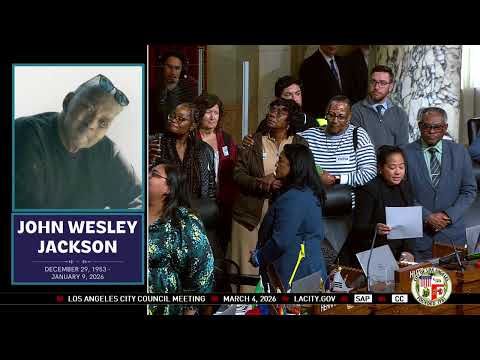
The Bureau of Street Lighting told the Los Angeles City Council on March 4 that its system is under strain from decades of underfunding, rising vandalism and increased liability exposure, and that the city should consider a multi‑million dollar remediation plan.
Miguel Sanglan, director of the Bureau of Street Lighting, told councilmembers the most important fiscal figure is roughly $45 million in annual revenue generation for the bureau but that operations have been effectively subsidized by about $17 million of general‑fund support. During a presentation Sanglan said deferred maintenance and theft have produced tens of thousands of service requests and that many LED fixtures are reaching end of life.
Sanglan outlined a proposed evaluation and budget that, as described in the presentation, would include roughly $51 million for maintenance and backlog remediation, about $18 million to convert vulnerable circuits to solar‑battery systems, and $26 million to restore aging poles and conductors. He said vandalism and theft are major drivers of outages and higher costs and urged an honest accounting of system needs.
Councilmembers pressed staff on tactics to reduce theft and speed repairs. Concejala Rodríguez asked for clarity about outstanding requests and about the distribution of satellite yards to reduce travel times; staff said they have about 3,000 critical units requiring replacement unless additional funds are secured. Officials described fortification measures (concrete/metal cages), a small camera pilot supported by roughly $1.5 million in targeted funds, and the potential use of MICLA financing for solar purchases (~$65 million was discussed as a financing scenario in staff remarks).
Councilmembers requested a third‑party audit of operations and implementation plans showing how response times would improve and where solarization or fortification would be prioritized. Sanglan said some measures (for example, solarization of specific circuits) have produced cost savings in pilot areas and that new in‑house manufacturing of parts has reduced unit costs in some cases.
Next steps: staff said they would present an evaluation report and engineer’s assessment to the council by the March 24 date referenced in the presentation to meet ballot/implementation timelines for the following fiscal year. The council asked for follow‑up details on prioritization, funding sources and the impact of proposed fortification and camera programs.
Sources: Bureau of Street Lighting presentation and council Q&A during the March 4, 2026 meeting.