Get Full Government Meeting Transcripts, Videos, & Alerts Forever!
Get email alerts on the Humanitarian Crisis Middle East topic
No spam. Unsubscribe anytime.
UN warns of rising civilian harm in Lebanon and Gaza, urges sustained humanitarian access
Summary
At a UN press briefing, the UN spokesperson reported mounting civilian casualties and displacement in Lebanon and Gaza, detailed limited but critical deliveries including 400,000 liters of fuel, and called for more crossings and urgent funding to scale up aid.
The United Nations on Thursday warned that civilians in Lebanon and Gaza are facing increasing harm as hostilities intensify and humanitarian access remains highly constrained.
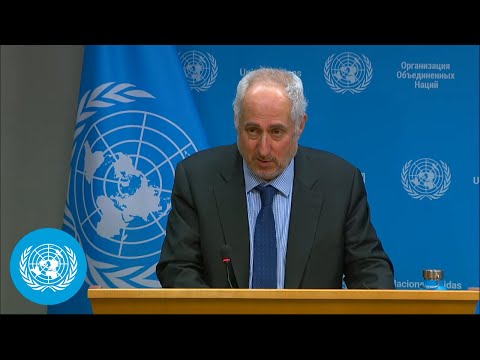
UN spokesperson Steph told reporters that "civilians and civilian infrastructure must be protected at all times by all parties to a conflict," and said UN partners report more than 50 people killed and hundreds injured in Lebanon over the past two days, and at least 80,000 people seeking refuge in collective shelters. "These are the figures local authorities are telling us," she said, adding that the numbers likely understate the full scale of displacement.
The briefing outlined humanitarian reaches and shortfalls: food-security partners have reached more than 20,000 displaced people with hot meals and over 15,000 with ready-to-eat rations in Lebanon, while UN colleagues have been scaling up mobile primary health services and supporting water and sanitation operations. The 2026 humanitarian appeal aims to reach about 1.5 million vulnerable people with $1.6 billion, the spokesperson said, and "urgent additional funding and capacity are required to sustain and expand life-saving operations."
On Gaza, the spokesperson reported the reopening of the Kerem Shalom/Abu Salim crossings and that coordinated UN-led missions offloaded wheat, flour, canned food, baby items, hygiene supplies and medicines. Quoting UNOPS's head, Jorge Mor Da Silva, she said his office reported delivering "400,000 liters of fuel yesterday to key distribution points in Gaza," and added that much more sustained, predictable access and supplies are needed so aid agencies can scale up operations.
The UN also warned of secondary risks: displacement sites in Gaza are at flood risk, with more than 900 of some 1,500 sites reported vulnerable to flooding if the rainy season continues, threatening hundreds of thousands of displaced people whose homes were damaged or destroyed. The spokesperson noted that eight temporary relocation sites have been identified but said partners lack the tools and materials to make longer-lasting shelters.
The spokesperson emphasized operational constraints: crossings remain heavily restricted, shipments and movements are disrupted, and partners face fewer financial and human resources than in previous years. "A sustained flow of supplies, including fuel, must enter Gaza in a safe, predictable manner," she said.
The briefing closed with a reiteration of diplomatic outreach: the Secretary-General has met with several permanent representatives and is pressing for a return to dialogue, the spokesperson said, but offered no timeframe for renewed negotiations.
Next steps: the UN said it would continue to coordinate with national and local authorities, scale rapid response teams, and press member states and donors for additional funding and access to support humanitarian operations.