Get Full Government Meeting Transcripts, Videos, & Alerts Forever!
Get email alerts on the 988 Transparency topic
No spam. Unsubscribe anytime.
Council hearing backs quarterly reporting and a 988 task force to improve crisis response
Summary
Council members and advocates pressed for quarterly public reporting on mental‑health emergency responses and creation of a 988 task force and education campaign to strengthen referrals, reduce police involvement and map where mobile crisis teams are and are not responding.
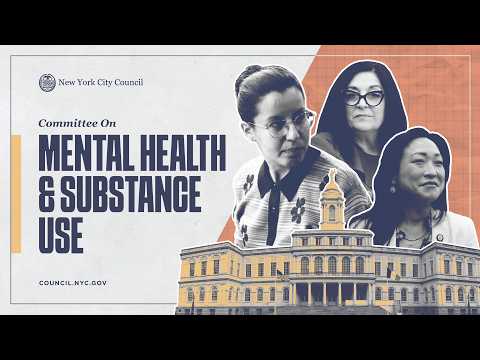
Chair Council Member Tiffany Kaban opened the New York City Council Committee on Mental Health and Substance Use oversight hearing by naming the hearing’s purpose: to examine how the city connects New Yorkers to mental‑health services from the first 988 contact through longer‑term care. She framed the hearing around the case of a 23‑year‑old Brooklyn resident, cited by Kaban as “Jabz,” whose family twice sought crisis care and who later was shot by police while in crisis. Kaban said the case illustrates “the space between stabilization and sustained care” and urged better pathways from crisis intervention into programs such as intensive mobile treatment (IMT) and assertive community treatment (ACT).
Council Member Schulman, chair of the Committee on Health and a sponsor of Intro 722, characterized the bill as a transparency measure. "If we are serious about building a public‑health‑centered crisis response system, we need clear accessible information about where BeHEARD is working, where it is not, and why," Schulman said. Intro 722 would require the Office of Community Mental Health to report quarterly on mental‑health emergency calls handled through 911 and 988 and to indicate whether the Behavioral Health Emergency Assistance and Response Division (BeHEARD) was dispatched and how calls were resolved.
Public Advocate Jamani Williams and several council members urged broader reforms alongside reporting. Williams warned that repeated hospital discharges without connection to sustained supports can leave people cycling through hospitals, jails, and homelessness and said oversight is needed in light of recent state changes expanding criteria for involuntary psychiatric evaluation. Council Member Lee, a co‑sponsor of a companion pre‑considered bill, described a two‑part proposal: establish a 988 improvement task force that includes people with lived experience to recommend operational fixes (training, de‑escalation scripts, dispatch protocols), and fund a public education campaign so New Yorkers know when to call 988 and what to expect.
City witnesses said they support the intent of greater transparency but warned about operational and legal constraints. Dr. Gan Wright, Executive Deputy Commissioner at the Department of Health and Mental Hygiene (DOHMH), described the crisis continuum ("someone to call," "someone to respond," "somewhere to go") and outlined privacy and technical concerns tied to publishing individual‑level treatment information. Laquishia Grant from the Mayor’s Office of Community Mental Health said required fields such as precise location or unique dispatch identifiers could create re‑identification risks under HIPAA if not carefully redacted or aggregated.
Committee members pushed agencies to find practical reporting approaches that protect privacy while giving the public and policymakers usable measures (call volume, response times, call abandonment, how many eligible calls receive BeHEARD, and geographic patterns). Several council members signaled support for quarterly reporting and for legislation that would publish the size and composition of waitlists for IMT/ACT teams.
What’s next: the committee pre‑considered Intro 722 and the task‑force bill; members asked DOHMH and the Mayor’s Office for follow‑up on data elements, privacy safeguards and an implementation timeline. The council said it will continue oversight and requested quarterly updates when possible.