Get Full Government Meeting Transcripts, Videos, & Alerts Forever!
Get email alerts on the Mobility Plan topic
No spam. Unsubscribe anytime.
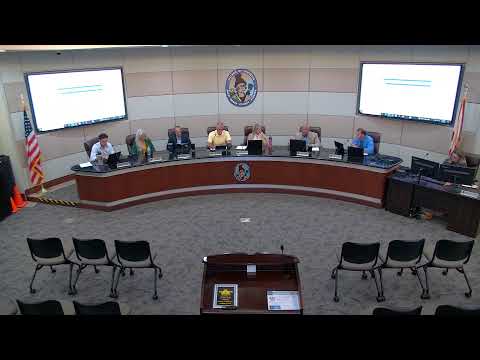
Tequesta workshop reviews draft mobility plan focused on safety, trail spine and quick-build fixes
Summary
Consultants presented a draft Village of Tequesta mobility plan that prioritizes 10 projects (a river-to-ocean trail, an Old Dixie linear park and scattered safety/connectivity fixes), stresses phased funding and implementation, and leaves the question of a mobility fee unresolved.
The Village of Tequesta on Sept. 2 heard a draft mobility plan from consultants that frames multimodal goals around safety, access and placemaking and recommends 10 priority projects to be phased and funded through county and regional mechanisms.
Community Development Director Jay Hoch introduced the presentation and said the study, which the Palm Beach County TPA partially funded, did not find a single large mobility problem but instead identified many smaller, targeted interventions. "In our findings there's no real major issue in Tequesta in terms of mobility," Jay Hoch said, adding the plan focuses on ways to help people move more safely and to position projects for county and TPA funding.
KDson consultants presented the plan's approach and priorities. Project manager Alex described the plan as a "living document" to guide multimodal connections, identify funding strategies and measure implementation. The firm said public outreach documented roughly 300 interactions (in-person mapping, workshops and online responses), and that feedback emphasized cut-through traffic, sidewalk gaps, and east-west connections.
The consultants condensed about 50 candidate projects into 10 priority projects grouped into three buckets: a river-to-ocean trail linking parks and open spaces; an Old Dixie linear-park concept to activate and formalize the corridor; and a set of smaller corridor and intersection safety and connectivity improvements (midblock crossings, median and refuge islands, curb-radius adjustments, raised intersections and spot speed-calming measures).
Consultants noted most trail segments fit inside existing rights-of-way; one midblock connection near the railroad may require an easement. They presented planning-level cost estimates and a phasing approach so elements (shared-use path, mobility hubs, crossing treatments) can be constructed over time rather than as a single large project.
Policy recommendations included integrating the mobility plan with forthcoming comp-plan and land-development updates, screening projects into the TPA/CIP and SunTrail funding cycles, piloting low-speed vehicle parking and regulations, and launching e-bike safety education and delineation on shared paths.
Council members pressed for detail on trade-offs. Several members voiced concern that additional midblock crossings or forced stops on main roads can encourage cut-through volume on neighborhood streets; staff and the consultants said selected traffic-calming measures aim to slow neighborhood speeds without unduly harming main-road flow. The intersection of Bridge Road and Old Dixie drew particular attention: consultants presented options to prohibit or reform the left-turn movement with refuges and curb modifications, and council requested further study on how any change would affect nearby routing and stacking.
Public commenters raised site-specific concerns during public comment: one resident asked why a previously proposed roundabout at Village Boulevard and Old Dixie was not advanced; others urged preservation of parking protections and cautioned that sidewalk or landscape removal should be avoided where recent investments exist.
Next steps outlined by staff included refinement of conceptual designs, addition of any non-burdensome regulatory items into an upcoming code update, and continued outreach to the TPA for project funding. Council did not vote on adoption at the workshop; staff will return with materials and potential ordinance language as projects are refined.
Provenance: This article is based on the workshop presentation and subsequent council discussion (topic intro SEG 014; topic finish SEG 1799).