Get Full Government Meeting Transcripts, Videos, & Alerts Forever!
Get email alerts on the Tequesta Priorities topic
No spam. Unsubscribe anytime.
Tequesta advisory committee recommends ranking priorities, weighs living‑shoreline pilot and green‑building incentives
Summary
Committee members discussed ranking eight recommended initiatives for presentation to Village Council, recommended elevating items tied to the strategic plan, and debated pursuing a living‑shoreline pilot, outreach to nearby Jupiter for examples, and permit/financing options including rebates or fee reductions.
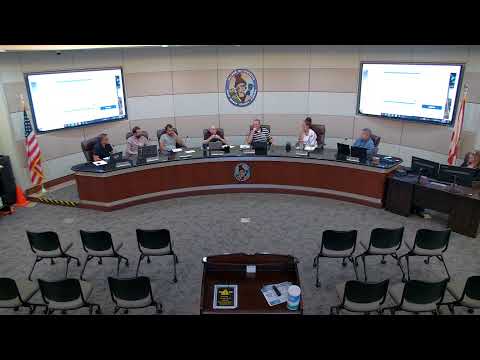
Members of the Village of Tequesta Environmental Advisory Committee spent part of their Sept. 10 meeting reviewing a staff memo the committee will present to Village Council and debating whether to present its priorities in ranked order.
Committee members suggested prioritizing initiatives that map to the Village strategic plan (members flagged items 3, 4 and 6) so council can consider funding in upcoming budget cycles. One member said presenting "the top three" items prominently can help ensure council reads and considers them when preparing next year’s budget.
The committee discussed a possible living‑shoreline pilot (mangrove plantings plus softer shoreline approaches to replace or augment hard seawalls). Members noted challenges in identifying a test site—some candidate locations are too deep, others already have living shoreline features—and discussed two approaches: 1) proactively selecting and funding a pilot site, or 2) providing a per‑linear‑foot incentive or rebate to property owners who choose a living‑shoreline approach when they require a seawall replacement.
Jay (staff) and others recommended researching per‑linear‑foot cost ranges for a specific living‑shoreline typology rather than using broad national averages, and suggested reaching out to Jupiter’s environmental department for case studies and video material that could be used for local outreach.
Members also reported prior EAC work on green‑building incentives, and staff said those recommendations (largely non‑cash incentives such as permit‑fee rebates and expedited permitting) have been presented to council but remain to be adopted. The committee discussed aligning its priorities with council’s March strategic planning cycle so that prospective items are more likely to be budgeted in the following year.
The committee did not vote on a ranked list at this meeting but agreed to refine priorities and brief council; staff were asked to prepare language that emphasizes the EAC’s role in shaping proposed projects tied to the strategic plan.