Get Full Government Meeting Transcripts, Videos, & Alerts Forever!
Get email alerts on the Code Updates topic
No spam. Unsubscribe anytime.
Tequesta staff present broad code update; council agrees to pursue green-building incentives and clarify construction rules
Summary
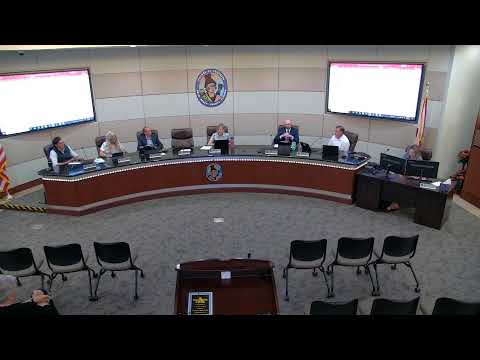
At a council workshop, Community Development Director Jay Hubch outlined a multi-part code update—three ordinances (0326, 0426, 0526) slated for next meeting—covering construction hours, green-building incentives (expedited permitting and permit-fee reductions), accessory-structure placement, artificial-turf standards aligned with state rules, and a new waiver process for PRDs. Council raised questions about enforcement, variance routing, and timing.
Jay Hubch, community development director, opened the Village of Tequesta workshop with an overview of a large set of building and zoning changes that staff plans to split across two meetings. He told the council three ordinances—0326, 0426 and 0526—will be presented for first reading next week and the remainder of the package will follow in April or May.
Why it matters: The package touches everyday development rules—when construction can occur, how temporary construction sites are managed, how the village treats accessory structures and drive-through restaurants, and whether the village offers incentives for green building. Those changes affect property owners, developers and neighbors and set the framework for future site-review decisions.
Hubch described ordinance 0326 as largely corrective for construction-hour language that was missed in a 2025 update, calling it “really just a glitch.” On incentives, he proposed a modest green-building program centered on expedited plan review, prioritized inspections and reductions in permitting fees rather than density or height bonuses, which he said are “a non‑starter to Questa.” He described a tiered fee-reduction approach tied to certification levels (for example, LEED, Florida Green Building Council standards and ENERGY STAR) and said Wayne Cameron in the building department has agreed to prioritize qualifying projects so they “get bumped up in the queue.”
The council pressed staff on several operational points. Council members supported codifying the building-department manual for construction-site maintenance (requiring temporary fencing, keeping activity inside the fence and installing silt fencing) to give code enforcement authority to cite violations. Staff said codification would give the building department “teeth” to pursue compliance and special‑magistrate hearings when contractors remove protections early and create dust or erosion problems.
Council debate also covered accessory structures and variances. Staff proposed clarifying that accessory structures must be located behind the front face of a primary building so features such as pools or courts cannot be sited in the front yard; council members noted that exceptions for very large lots could be considered via variance. On variances, staff explained single‑family residential variances continue to be routed to the Planning & Zoning Board, while multifamily and commercial variances go directly to council.
The draft code also adopts the Florida Invasive Species Council’s prohibited‑plant list by reference, and it incorporates state guidance on artificial turf tied to last year’s House Bill 683 and associated agency rule language. Staff said the state rule includes provisions such as a 10‑foot setback from water bodies for turf installations on parcels under one acre and a prohibition on in‑ground irrigation systems to cool artificial turf areas.
What’s next: Staff will bring ordinances 0326, 0426 and 0526 for first reading next week. The council asked staff to refine language on waivers for PRDs and on photometric plans (lighting) and requested clearer criteria for when certain exceptions bypass PZB and go to council. Council members also requested staff propose an exemption or simpler path for very large lots where front-yard amenities are common.
At the end of the discussion Hubch said staff will prepare draft ordinance language for the next meeting and that minor edits could be made between first and second reading if they remain within the advertised title and subject.
Ending: The council did not take a formal vote at the workshop; staff will present the ordinances at the next meeting where the council may amend language on the record or direct additional changes ahead of second reading.