Get Full Government Meeting Transcripts, Videos, & Alerts Forever!
Get email alerts on the Operation Epic Fury topic
No spam. Unsubscribe anytime.
White House calls Operation Epic Fury a success, urges Americans in the Middle East to register with State Department
Summary
At a White House briefing, Karoline Leavitt said Operation Epic Fury has achieved key military objectives, urged U.S. citizens in the Middle East to register with the State Department for evacuation assistance, and reiterated U.S. forces do not target civilians while a Defense investigation is underway.
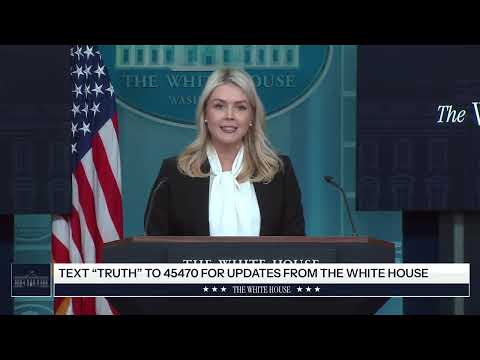
White House spokeswoman Karoline Leavitt said the administration’s campaign against Iran — which it has named Operation Epic Fury — has achieved significant effects and that the United States is working to bring American citizens home from the region. “The rogue Iranian terrorist regime is being absolutely crushed,” Leavitt told reporters, listing the operation’s stated objectives to destroy Iran’s ballistic-missile capability and naval assets, disrupt weapons production, and prevent the country from obtaining a nuclear weapon.
Leavitt said U.S. forces have struck “more than 2,000 targets” and asserted more than 20 Iranian ships, including “their top submarine,” had been destroyed. She expressed condolences for six U.S. service members who died in the operation and said President Donald J. Trump intends to attend their dignified transfer.
Why it matters: The briefing packaged the administration’s rationale for the strikes, tied combat aims to wider diplomatic and security goals, and highlighted immediate humanitarian and logistical issues — notably the evacuation and welfare of U.S. citizens in the Middle East.
Leavitt urged U.S. citizens still in the region to register with the State Department so consular officials can identify them and arrange commercial or chartered flights: “If you are a U.S. citizen in the Middle East looking to return to the United States, the Secretary of State asks that you please register with the state department at step.state.gov,” she said. Leavitt added the administration was chartering flights free of charge where possible and coordinating with regional partners to facilitate departures.
Reporters pressed Leavitt on several operational and policy points. Asked whether regime change was an explicit goal, she reiterated the operation’s four military objectives and declined to engage in hypotheticals about post-conflict governance. On allegations that U.S. strikes killed civilians at a girls’ elementary school, Leavitt said the Defense Department was investigating and stated, “Not that we know of,” while reiterating that U.S. forces do not target civilians.
On evacuation planning and public communications, Leavitt defended the State Department’s prior travel advisories and said the department had issued multiple warnings and embassy guidance earlier in the year. She acknowledged reports that some Americans were told the department could not help, but said the hotline message had been updated and urged journalists to report the corrected guidance. Leavitt repeated reported return figures, saying more than 17,500 Americans had already come home, with roughly 8,500 returning the previous day and an estimated 6,000 still seeking help.
The briefing also addressed economic and strategic concerns. Leavitt said the administration stood ready to escort tankers through the Strait of Hormuz if necessary and pointed to planned U.S. political-risk insurance for crude carriers as one step to stabilize energy markets. On U.S. munitions, she said stockpiles were sufficient for the operation and that the President was urging defense contractors to increase production; she declined to detail congressional requests.
Leavitt declined to rule out military options in the future, saying ground forces were not part of the current plan but that she would not “take options off the table” for the President. On reports that Iran’s leadership or succession plans were shifting, she said U.S. intelligence was monitoring developments and that the available reporting influenced timing but did not alone determine the President’s decision.
Leavitt also pointed reporters to public statements from U.S. Southern Command on concurrent operations in Ecuador and announced that the President will convene a Latin America Summit in Miami with leaders from a number of Western Hemisphere countries to discuss regional security.
What happens next: Leavitt said the administration would continue evacuation efforts, await results of the Defense Department’s investigation into the reported school strike, and press allies and industry partners to support the operation’s objectives. She closed the briefing by noting the President’s upcoming public events.