Get Full Government Meeting Transcripts, Videos, & Alerts Forever!
Get email alerts on the Dark Sky topic
No spam. Unsubscribe anytime.
Erie planners propose dark‑sky ordinance to reduce light pollution, protect migratory birds and cut energy costs
Summary
City planning staff proposed a dark‑sky ordinance that would begin by upgrading city‑owned lighting to shielded, warm‑color LEDs, citing safety, energy savings and protection for migratory birds; staff asked the Erie City Advisory Council to expand a subcommittee and draft an ordinance outline for the administration.
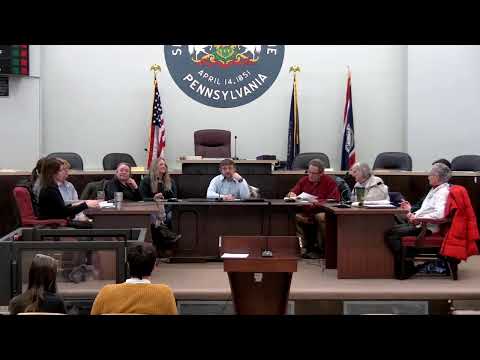
Planning staff presented a proposal for a dark‑sky ordinance aimed at reducing light pollution, improving nighttime safety and cutting municipal energy costs. Hannah Oleski, neighborhood resource coordinator, and Cooper Moore, assistant planner, framed the ordinance as a first step that would prioritize city‑owned fixtures and invite subject‑matter experts to the EAC subcommittee.
The presenters argued the ordinance would require or encourage shielded fixtures, timing controls and warmer color temperatures to reduce glare and light trespass. "Dark‑sky ordinances ... ensure safe, aesthetically pleasing, and energy efficient outdoor lighting, preserving views of the night skies, and minimizing harm to species," Cooper Moore said during the presentation. Staff said beginning with city‑owned lighting gives the city direct control over a manageable inventory (staff estimated roughly 700–800 city‑owned fixtures) and creates a visible example for broader community adoption.
The presentation tied the proposal to public‑safety goals (improving nighttime visibility for pedestrians and drivers), resident comfort (reducing light trespass near homes) and environmental protection. Staff cited national research on wasted outdoor lighting and municipal LED retrofit projects that reduced wattage and operating costs; they highlighted Pittsburgh’s 2021 ordinance as a local model for phased implementation and for tracking retrofit progress.
Council members asked how signage rules, waterfront development and utility‑owned streetlights would be handled. Staff said existing sign regulations would remain in force and could be revised later, that waterfront conditional‑use zoning could be a place to layer dark‑sky protections, and that many streetlights are owned by the electric utility (staff said about 8,000 utility‑owned lights vs. roughly 700–800 city‑owned), which limits the city’s unilateral authority to require replacements on utility poles.
Staff asked the EAC to expand the dark‑sky subcommittee to include outside experts (for example, contacts at Carnegie Mellon and Penn State’s planetarium) and recommended the subcommittee produce a city‑specific outline that staff could use to draft an ordinance for City Council consideration. Members supported sharing Pittsburgh materials, inviting technical experts and starting with a city‑owned‑lights pilot. The presenters agreed to provide materials and model documents to the subcommittee.