Get Full Government Meeting Transcripts, Videos, & Alerts Forever!
Get email alerts on the Erie Coke Site topic
No spam. Unsubscribe anytime.
Local advocacy group urges EAC to press city for community working group on Erie Coke contamination
Summary
Members of Hold Erie Coke Accountable urged the Environmental Advisory Council to recommend creation of a city-led community working group and/or form an EAC subcommittee to improve public engagement and probe pollutant impacts at the former Erie Coke site.
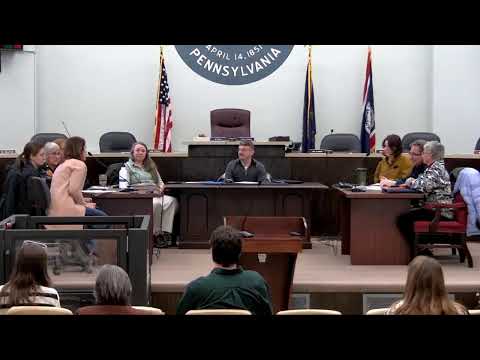
Representatives of Hold Erie Coke Accountable (HEKA) urged the City of Erie Environmental Advisory Council at its Feb. 25 meeting to press city leaders to step up engagement and transparency around contamination at the former Erie Coke plant.
“It's time for the city of Erie to show more of a leadership role,” said a HEKA representative, referencing multiple state and federal investigations since the plant closed in 2019 and a 2025 study with publicly available results. HEKA members said monitoring indicates pollutants are affecting areas around the marina and other public spaces and called for clearer, citizen-friendly explanations of technical reports and more frequent public involvement.
HEKA urged the EAC to either form a focused subcommittee to develop a recommendation or to draft a letter asking the mayor and city council to establish a community working group that would include city staff, port and redevelopment authority representatives, environmental advocates and business stakeholders. HEKA said such a group would mirror a model used in Tonawanda, where a mayor‑initiated working group improved public engagement during cleanup work.
EAC members said the council can advise the mayor and council but cannot force city action. Board members discussed the possible roles for an advisory subcommittee: preparing draft recommendations, identifying needed partners, and producing materials that the city could use to convene a broader working group. One board member suggested the EAC could draft a more detailed letter and bring it back for review at the next meeting.
City staff and board members also discussed jurisdictional complexity: the port authority owns the property, the redevelopment authority is charged with cleanup, and state agencies such as DEP and EPA have been involved. Speakers noted that the mayor sits on the port authority board, which provides an institutional connection, but said the city’s precise land‑use authority and regulatory levers vary by issue.
The EAC agreed to refine the proposal: staff volunteered to work with HEKA representatives to revise the suggestion and circulate a draft recommendation or letter for review before the next meeting.
The council did not vote on a formal recommendation at the Feb. 25 meeting; members instead agreed to continue work and to place a revised proposal on a future agenda.