Get Full Government Meeting Transcripts, Videos, & Alerts Forever!
Get email alerts on the Emergency Services topic
No spam. Unsubscribe anytime.
Lincoln approves decade-long ALS interlocal agreements with 11 rural fire districts
Summary
The City Council unanimously approved interlocal agreements between Lincoln Fire and Rescue and 11 rural fire districts to provide advanced life support (ALS) services from Sept. 1, 2025, through Aug. 31, 2035; Lincoln officials said responses depend on unit availability and agreements are reciprocal when possible.
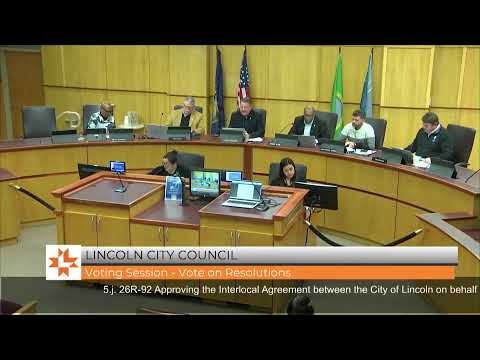
The Lincoln City Council on March 2 approved a package of interlocal agreements that commit Lincoln Fire and Rescue to provide advanced life support emergency services to 11 neighboring rural fire districts for a 10‑year term running Sept. 1, 2025, through Aug. 31, 2035.
Jamie Posposhly of Lincoln Fire and Rescue told the council the batch is consistent with prior agreements the city uses to supply ALS when rural districts request assistance. "The agreement states if none are available, then we will not respond to the county," Posposhly said, describing the department's staffing limits and the use of four ready reserve units to cover shortages.
Councilman Schorr asked whether the agreements are reciprocal in times of need. Posposhly said Lincoln can request partner stations to staff and that those partners have helped in prior instances when Lincoln had insufficient ambulances.
The council approved each interlocal agreement by roll call, with votes recorded as unanimous (6‑0). Affected partners named in the meeting included Ceresco, Elmwood, Firth, Hallam, Hickman, Malcolm, Raymond, Southeast, Southwest and Valparaiso rural fire districts; the formal motions were introduced by Councilman Schorr and seconded as noted in the record.
The council treated the agreements as a package of standard interlocal contracts; staff did not identify new service levels or funding changes in the presentation. According to Lincoln Fire's remarks, the agreements govern when Lincoln will respond to rural requests and the circumstances under which rural partners may be asked to assist Lincoln.
Next steps: the agreements were approved during the meeting and are effective for the term stated in each interlocal contract.