Get Full Government Meeting Transcripts, Videos, & Alerts Forever!
Get email alerts on the Budget Finance topic
No spam. Unsubscribe anytime.
Martinez Unified board adopts 2024–25 unaudited actuals; ending balance stronger than projected
Summary
Business officials reported revenues within about 1% of projections, higher interest income, reduced special‑education contract spending, and an improved ending balance; trustees approved the unaudited actuals and related Gann-limit resolution.
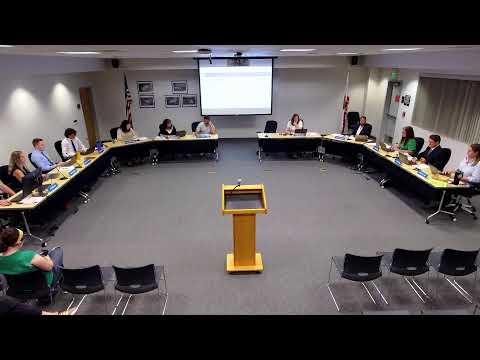
Martinez Unified School District trustees on Sept. 8 adopted the district's 2024–25 unaudited actuals after a presentation from business staff that showed revenues and expenditures closer to projections than anticipated and an improved ending balance.
"Overall, we came in within 1% of our estimates," business official Andy Cannon said, noting that unrestricted revenues were near projections and that interest income exceeded expectations by roughly $323,000. Cannon told the board that federal revenues looked lower year‑over‑year because some federal grant dollars are carried forward and claimed when expenses are incurred.
Key figures and impacts: staff reported that afterschool funding increased due to a per‑unduplicated pupil adjustment, that books and supplies spending came in substantially under projections, and that special‑education contract costs were about $329,000 lower than anticipated. Those variances, combined with higher interest earnings and reduced PG&E costs, produced a higher ending balance than projected. The district still expects multi‑year deficit spending of about $3.3 million but said this is an improvement from the previously projected $4.8 million deficit.
Trustees approved the unaudited actuals and later adopted Resolution 2026‑03 establishing the district’s Gann spending limit for 2025–26, a routine state compliance item tied to the fiscal report. Board votes on those items were recorded in the meeting minutes as moved, seconded and carried.
What happens next: staff said the improved unaudited actuals give the district more runway for planning but that multi‑year budgeting will require continued review and potential program adjustments; staff indicated reductions may be discussed with the board beginning in October and presented by February if necessary to meet HR and budget timelines.
(Report based on the business office presentation and board action at the Sept. 8 meeting.)