Get Full Government Meeting Transcripts, Videos, & Alerts Forever!
Get email alerts on the Education Equity topic
No spam. Unsubscribe anytime.
Alhamra High reports big gains under three-year equity blueprint, trustees hear
Summary
Alhamra High School officials told the Martinez Unified School District board that a targeted three-year 'Equity Blueprint' and counselor-led interventions helped raise the school’s college-and-career indicator from about 44% to 57%, with notable gains among Latinx and socioeconomically disadvantaged students.
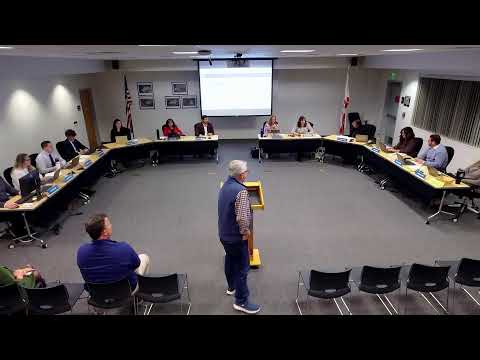
Frank Bey, speaking for Alhamra High School, told the Martinez Unified School District Board on Jan. 12 that a three-year Equity Blueprint developed with EdTrust West has produced measurable improvement in the school’s college-and-career indicators. Bey said the school’s overall rate rose from roughly 44% to 57% and cited subgroup gains: Latinx students from 33% to 47%, socioeconomically disadvantaged students from 34% to 45%, and special-education students from 0% to 24%.
Bey said the blueprint rests on three academic goals — informing students and families about A–G requirements, revising grading practices, and aligning courses with CSU/UC requirements — plus a climate-and-culture plan to strengthen family engagement. He described a districtwide push to give counselors time for one-on-one planning meetings with every student, expanded world-language offerings to meet A–G benchmarks, and efforts to increase CTE pathway completions and college articulation agreements with local community colleges.
Board members asked for technical details about grading changes and data sources. Bey acknowledged grading-practice reforms are ongoing and vary by teacher, saying some instructors are moving to four-point scales or eliminating C-minus grades to avoid limiting students’ postsecondary options. He said the data cited are from the most recent completed school year and that the school will use first-semester results this year to identify students still short of A–G and target supports.
Bey also described climate-and-culture work based on the California Healthy Kids Survey and said the school will use Wednesday professional-development time to analyze participation and engagement data (Aries) and to design interventions targeted at underrepresented groups. He highlighted partnerships with community organizations such as the Rainbow Community Center and ongoing work to expand CTE offerings funded in part by articulation agreements with local colleges.
The board offered congratulations and asked for follow-up reports; trustees and the student representative praised counselors’ one-on-one outreach and requested specifics on extracurricular participation rates, which Bey said the school would provide next month.