Get Full Government Meeting Transcripts, Videos, & Alerts Forever!
Get email alerts on the Finance Housing topic
No spam. Unsubscribe anytime.
Council accepts fiscal report, directs staff to pursue CFD compromise with developer
Summary
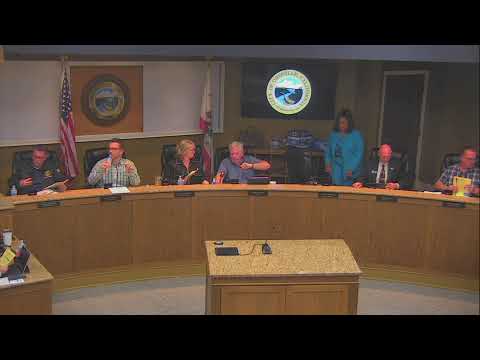
After reviewing a fiscal-impact analysis showing a likely general-fund shortfall from five proposed residential projects, the Oroville City Council gave staff direction to work with the developer on a Community Facilities District structure that would provide ongoing public-safety funding while easing up-front developer costs.
The Oroville City Council accepted a fiscal-impact report on proposed residential developments and directed staff to pursue a Community Facilities District (CFD) arrangement that would combine developer financing needs with ongoing revenue for police and fire services.
Mike Medvey, the consultant who prepared the analysis, told the council the five projects under study would add roughly 436 housing units and about $22 million in secured assessed value but could leave the city with a net annual general-fund deficit once added police and fire service costs were included. "There is a net ongoing general fund deficit," Medvey said, citing police and fire as the main cost drivers.
Developers told the council their proposals depend on reasonable financing terms to keep home prices at market levels. City staff and the development team described a compromise: waive some up-front public-safety impact fees and instead include a dedicated public-safety special tax inside a CFD so the project reduces initial borrowing needs while generating ongoing dollars for services. Staff described the mechanism as land-secured debt (nonrecourse to the city) paired with a rate-and-method of apportionment that will be brought back for council approval if the council wants to proceed.
Council members said they want Oroville to attract market-rate housing but stressed the need to ensure long-term funding for municipal services. "This could be huge for our community," Councilmember Weber said, urging a careful path that preserves public-safety funding while enabling the project to move forward.
The council asked staff to finalize terms with the developer on the specific projects on the agenda (including the Ready Creek phases and related parcels), prepare required CFD documentation and return with the ordinance language, financing parameters and a schedule for necessary public hearings and a special landowner election. Councilmembers indicated they might limit any fee-waiver approach to a time-limited window or to the projects on the table to avoid creating a permanent precedent for future projects.
Next steps set by the council include staff work to draft a developer agreement, finalize the CFD rate and boundary maps, run appraisals and, if those steps proceed, bring resolutions of intention and related documents back for formal readings and public hearings on the proposed CFD formation.
What happens next: staff will complete the CFD formation work and return the rate-and-method and required hearing materials to the council; bond issuance, if approved later, would be secured by land in the district, not the city's general fund.