Get Full Government Meeting Transcripts, Videos, & Alerts Forever!
Get email alerts on the Consumer Protection topic
No spam. Unsubscribe anytime.
Insurance-fraud reporting back on committee agenda; advocates call for mandatory reporting statute
Summary
The National Insurance Crime Bureau urged lawmakers to adopt mandatory insurance-fraud reporting; witnesses said Wyoming is one of only two states without such a law and that reporting helps reduce fraud-driven insurance costs.
Industry groups and anti-fraud advocates urged the Joint & Standing committee to pursue mandatory insurance-fraud reporting as an interim topic.
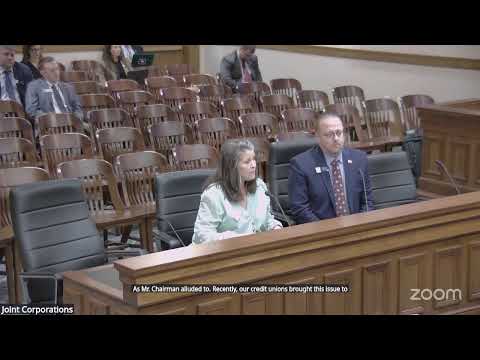
Marian Smith, director of strategy, policy and government affairs for the National Insurance Crime Bureau, told the committee that Wyoming is among only two states that lack statutory mandatory reporting for insurance fraud. "It's costing you and I and your constituents between $4,000 and $7,000 over a period in insurance premium costs," Smith said, arguing that mandatory reporting is a consumer-protection tool that helps identify fraud patterns and reduce wasteful costs.
Smith said national model-act changes now include additional categories (for example, inflated billing) and that the bureau stands ready to help provide data and draft language. She also said the bureau is investigating fraudulent LLC activity in neighboring states that has been used to launder or mask criminal activity related to stolen vehicles and other title-based crimes.
Committee members heard that mandatory reporting could be coupled with other anti-fraud measures—registered-agent oversight, third-party-filer registration and software analytics—to form a broader fraud-prevention package.
What happens next: advocates asked the committee to place insurance-fraud reporting on the interim list and to coordinate with the Secretary of State and law-enforcement stakeholders on complementary measures.