Get Full Government Meeting Transcripts, Videos, & Alerts Forever!
Get email alerts on the Utilities topic
No spam. Unsubscribe anytime.
Wyoming PSC asks committee for briefings on small water utilities and pipeline penalties
Summary
The Wyoming Public Service Commission asked the Joint & Standing committee to hold interim sessions on small water utilities’ capital and regulatory challenges and on aligning state pipeline civil penalties with federal levels to avoid losing federal primacy or funding.
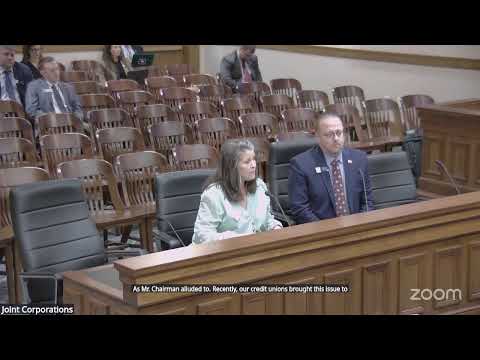
The Wyoming Public Service Commission on Wednesday asked the Joint & Standing committee to schedule interim briefings on two regulatory priorities: challenges faced by small water systems and a review of state civil penalties for pipeline-safety violations.
"I'm Mike Robinson. I'm the chairman of the Wyoming Public Service Commission," Robinson said in presenting the requests, noting that many Wyoming water systems are very small and face trouble raising capital to meet water-quality requirements and long-term maintenance needs. Robinson asked for an educational one-hour session to "have a conversation with the committee about those issues and then see what develops from that."
On pipeline enforcement, the commission asked lawmakers to examine Wyoming statute 372-128, which currently sets maximum civil penalties at $100,000 per day and a $1 million total. The commission noted that federal authorities authorize roughly $270,000 per day and $2.7 million total. "The federal agency that regulates pipeline safety has told us that this divergence between penalties could put us in non-compliance and put some of our funding and primacy at issue," Robinson said.
The request frames the penalty review as a compliance and funding question rather than a policy preference: the commission said the discrepancy could jeopardize the state's delegated authority to enforce federal pipeline rules. Committee members asked clarifying questions but did not make a decision on scheduling.
What happens next: the committee will consider where to place the PSC topics in its interim calendar as it ranks dozens of proposed subjects. If scheduled, the small-water session would be an educational briefing; the pipeline review would examine the statutory penalty limits and federal alignment options.