Get Full Government Meeting Transcripts, Videos, & Alerts Forever!
Get email alerts on the Court Caseloads And Recovery topic
No spam. Unsubscribe anytime.
Spokane court officials report rising caseloads, stress resource networks and launch recovery-court RFP
Summary
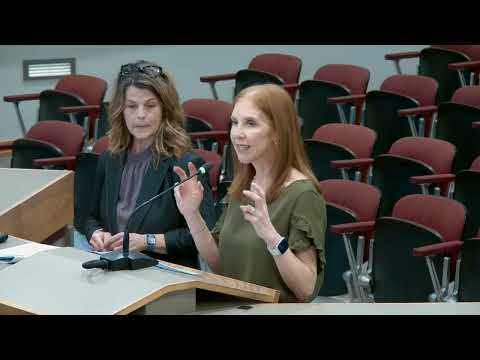
Court staff told the council that more than 900 cases have been filed under the new ordinance and that the municipal court lacks capacity for warm handoffs to housing and treatment; Sarah Thompson outlined a recovery-court model and an RFP for treatment services expected to yield contracted providers by May.
Court staff told the Spokane City Council that cases filed under a recent ordinance have surged and that the municipal court is monitoring hundreds of active matters while working to improve data collection and community referrals. The presenter said the court has recorded roughly 344 open cases and 247 closed cases, and that about 25% of cases have progressed to warrant status.
Why it matters: Council members pressed staff on whether the court can refer people to housing, substance-use treatment and mental-health services in ways that keep people connected to care. Staff and Judge Sullivan said dispositions — including stipulated orders of continuance and competency proceedings — drive what services are offered and that the court can make referrals but lacks the capacity for consistent warm handoffs or peer navigation.
Court officials said housing instability, substance use and mental-health needs are the three primary drivers behind repeat appearances. Judge Sullivan said referrals are offered when a disposition supports them, but the court cannot provide peer navigation or ongoing case management itself. "We do not have peer navigation," Judge Sullivan said when describing limits to courthouse capacity.
Sarah Thompson, who outlined the new Recovery Court model, said the city has moved from a traditional drug-court approach to a broader recovery-court structure focused on individualized service plans, behavior modification and addressing underlying needs. "We are looking at individualized service plans…not just the citation itself but what it is we can help them become healthier and happier people," Thompson said. She described an 11-member workgroup and an RFP process for treatment services that closed in late February and that a contracting recommendation is expected when council returns in May.
Funding and sustainability were a repeated theme. Thompson said the Recovery Court relies on grants — including an Administrative Office of the Courts allocation and multi-year behavioral-health awards — and warned that grant dependence makes long-term staffing and service continuity uncertain. "Sustainability is my biggest concern," she said.
What’s next: Staff said they will refine reporting (larger fonts and clearer visuals were promised) and dig deeper into recidivism and charge breakdowns for future briefings. The court also plans to analyze standard costs associated with misdemeanors to better understand financial impacts and potential cost–benefit of diversion and treatment investments.