Get Full Government Meeting Transcripts, Videos, & Alerts Forever!
Get email alerts on the Finances Audit topic
No spam. Unsubscribe anytime.
Anson County Schools gets clean audit but loses $2.8M in fund balance; district warned to curb costs
Summary
Auditors issued an unmodified (clean) opinion on the district's FY2025 financial statements but reported a combined decrease of about $2.8 million in fund balance and three internal-control findings; auditors warned retirement and rising costs will force cuts or use of reserves unless revenue changes.
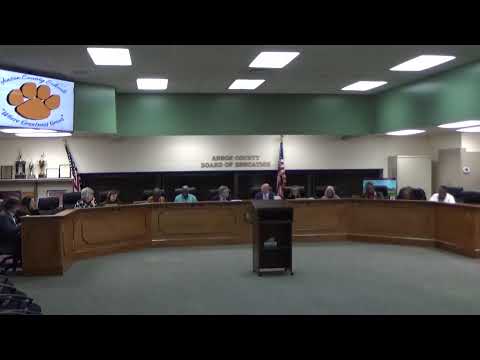
Andy Deal, an auditor with Anderson, Smith, and White, told the Anson County Board of Education on March 4 that the district received an unmodified audit opinion for the fiscal year ended June 30, 2025, but showed notable declines in reserves.
"An unmodified report is the cleanest report you can get on a set of financial statements," Deal said, adding that the district's general-fund balance was about $2.9 million and the other special revenue fund balance about $3.6 million as of June 30, 2025.
The audit presentation and slides showed a decrease in fund balance across the two main funds of roughly $2.8 million during the year. Deal said the general fund decreased by about $950,000 and the other special revenue fund decreased by about $1.8 million. He highlighted three audit findings tied to internal controls and prior-period adjustments, including the need to record Anson Middle School as a fixed asset.
Why it matters: the district is using savings to cover structural pressures. Deal emphasized that federal pandemic-era stimulus funding has largely expired and that costs such as salaries and retirement obligations are rising. "If nothing changes," he said, "you know, they're all going to lose fund balance." He noted retirement costs rose from roughly $3.1 million to $5.2 million over several years, and that a 3 percent cut in state revenue would be roughly $900,000 for the district — enough to quickly erode reserves.
The auditors also flagged the school nutrition program's cash drop of about $280,000 during the year and warned that if that trend continues, the general fund would have to subsidize the program. Board members asked for guidance about a recommended fund-balance target; Deal said a common rule of thumb is two to three months' operating expenses (approximately $1.5 million to $2.0 million for a district this size), but he emphasized the precise need depends on revenue trends.
The audit included three areas for improvement: (1) the district budgets at a very detailed level, which increases the risk of overbudget line items and tracking errors; (2) prior-period adjustments were necessary because fixed assets had not been recorded correctly (Anson Middle School was cited); and (3) the auditors made numerous adjustments during the engagement, producing an audit-finding level result though not an adverse opinion.
Board members heard that roughly $800,000 has been encumbered or assigned for next year's budget already. Deal recommended the board and administration pursue cost controls, prudent use of fund balance, and consideration of additional local funding if available. The board did not take an immediate policy vote on budget changes at the meeting; the presentation was positioned as informational and a prompt starting point for budget planning.