Get Full Government Meeting Transcripts, Videos, & Alerts Forever!
Get email alerts on the Transmission Project topic
No spam. Unsubscribe anytime.
Great River Energy outlines 115 kV transmission plan through Meeker County
Summary
Great River Energy presented a proposed 70-mile project to convert and rebuild an aging 69 kV line to 115 kV through Meeker County, describing route options, 70–90 ft steel poles, a 100-foot easement corridor, an anticipated 2029 construction start and PUC permitting next year.
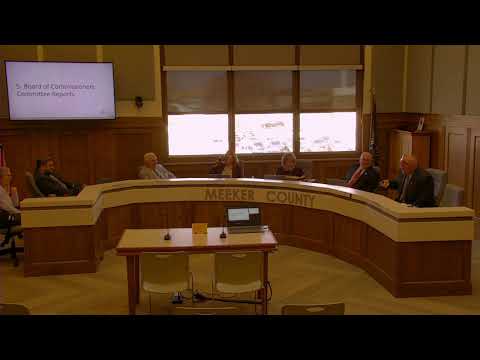
Mark Strous, a project manager for Great River Energy, told the Meeker County Board of Commissioners on March 3 that the cooperative is proposing a 115-kilovolt transmission project to replace an existing 69-kV system built in the late 1940s and 1950s that he said is “pretty much at the end of its useful life.” The presentation estimated the overall project at about 70 miles, with a mix of rebuild and new construction inside Meeker County.
The proposal covers rebuilding roughly 50 miles of existing 69-kV line to 115 kV and constructing about 20 miles of new line; presenters described in-county segments as approximately “20 miles new, 18 miles of rebuild.” Strous said GRE expects the 115-kV capacity to meet anticipated electrification and load growth for about the next 30 years and does not plan a double-circuit line at this time.
Why it matters: the upgrade would increase transmission capacity for local cooperatives and support future development, but it also would change the visual and land-use footprint along the route. Commissioners focused on route selection, substation siting, easement impacts and mitigation for nearby homes.
GRE outlined route options and coordination with neighboring high-voltage lines. The presenters said the new line would generally follow county roads where feasible, cross Highway 4 in one location and run near an XL Energy corridor; at that intersection, GRE expects XL’s larger-voltage structures to be above GRE’s lines. Typical pole designs shown to the board included steel monopoles and braced-post (delta) configurations. Strous said poles would generally be about 70 to 90 feet above grade and that steel construction allows longer spans — GRE cited spans of roughly 350 to 500 feet on steel poles versus shorter spans on wood.
On land rights, GRE said much of the corridor is covered by older blanket easements dating to mid-20th century transactions. The company plans to modernize easement language, seek a 100-foot corridor (50 feet each side of center) or about 55 feet alongside roads, and provide compensation for easement updates. Dale Ali, identified as a senior land agent for the project, described GRE’s outreach process and said the company typically works to place structures outside front yards and on section or parcel lines where possible.
Permitting and schedule: Strous told the board the full 70-mile project triggers state-level review — a certificate of need plus a route permit from the Public Utilities Commission. He estimated roughly a 12-month PUC process with scoping and informational meetings (including both in-person and virtual sessions) and a later hearing before an administrative law judge; the final PUC hearing would be at the commission offices in St. Paul. If permitting and engineering proceed on GRE’s current timetable, construction could begin in the 2029 window, executed in segments to avoid service interruptions, and extend into the early 2030s.
Questions from commissioners covered substation footprints, right-of-way widths, whether the company could bury the line and radio interference. GRE said typical substation footprints under consideration are about 200 by 250 feet (roughly two acres) and noted that some candidate parcels are city-owned or already used for utility purposes. On undergrounding, GRE said burying a 115-kV transmission line over long, cross-country distances is generally impractical and “eight to 10 times” the cost of overhead construction because of heat-dissipation systems and added pumping and maintenance needs. On radio and TV interference, GRE acknowledged the possibility of localized AM interference directly beneath a tower and said the company will test and apply mitigation (filters or equipment adjustments) if a landowner reports an issue.
What’s next: GRE said the company plans additional outreach and open houses in advance of PUC filings and expects to submit its application to PUC staff in June or July (per the presentation timeline). The presenters offered to follow up with landowners and township officials on specific route concerns and to continue coordination with other utilities about crossings and substation siting.
Votes at a glance: the board adopted the March 3 agenda and approved the consent agenda (including February 17 meeting minutes, Health and Human Services and hospital accounts payable, 2026 aquatic invasive species contracts, distribution of the 2025 aggregate tax and a club-on-sale liquor license renewal for Cedar Mills Gun Club). Both items passed on motions from the floor (movers and seconders recorded in the meeting minutes), and the chair declared the motions carried.
The board will continue engagement as GRE proceeds toward the PUC permitting steps; GRE representatives said additional local meetings and open houses are planned during the state review process.