Get Full Government Meeting Transcripts, Videos, & Alerts Forever!
Get email alerts on the Community Relations topic
No spam. Unsubscribe anytime.
Residents urge clarity on anti‑Semitism definition’s examples during public comment
Summary
At the Select Board meeting residents urged the board to clarify whether examples tied to an anti‑Semitism definition would be included in a town proclamation, warning that examples can blur criticism of foreign governments with hate toward Jewish residents and asking for transparent school reporting rules.
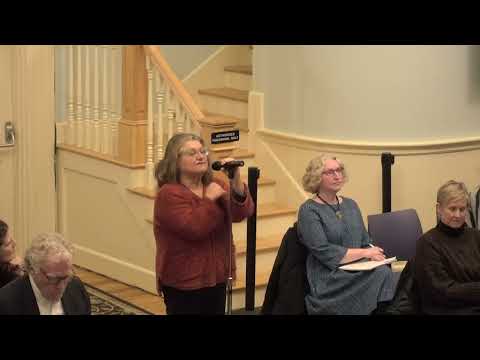
Wendy Rlli opened the Select Board meeting and limited the public‑comment period to 10 minutes. Multiple residents used their time to press the board for clarity about whether the town’s planned proclamation endorses the full set of examples that often accompany an anti‑Semitism definition.
Matan Kimone, of Hawthorne Lane, urged the board to record in writing that the town would adopt the definition paragraph but not the illustrative examples. “People need to be able to speak harshly about foreign governments without the select board adding the label that they could be anti‑Semitic,” Kimone said, arguing three examples in the definition could inappropriately label political criticism as hate speech.
Vanessa Moroni, a Concord‑Carlisle parent, said she supports efforts to combat anti‑Semitism but asked how the board’s action would interact with the schools’ bias incident reporting system: “Who determines whether a reported incident constitutes a bias incident, harassment, or a hate crime? Will the [definition] now serve as the standard?” she asked, noting concerns about disciplinary consequences and protections for students who may be falsely accused.
Other public commenters echoed differing perspectives: some urged the town to use the definition as an educational framework distinguishing policy criticism from collective blame, while others said the town need not adopt the example language to condemn clearly hateful speech.
Why it matters: residents said the issue affects free expression, school discipline protocols and community trust. Several speakers asked the board to document its intent precisely — for example, by amending the proclamation to state explicitly which components are being adopted — so schools and the public know what standard the town will rely on.
What’s next: the board heard the public comments during the meeting’s public‑comment period; no formal action on the proclamation was taken on March 2. The board may take up further discussion or a drafting amendment at a future meeting.