Get Full Government Meeting Transcripts, Videos, & Alerts Forever!
Get email alerts on the Secondary Water Policy topic
No spam. Unsubscribe anytime.
Planning commission forwards secondary-water code amendment after debate over culinary use and deferral agreements
Summary
The North Ogden Planning Commission unanimously voted to recommend a code amendment (11-26-8) that clarifies when the city may enter deferral agreements for secondary water availability and outlines potential protections (timelines, bonding, limited turf, xeriscaping, deed restrictions). Commissioners debated risks of allowing culinary water for irrigation and enforcement measures such as HOA controls, master meters and backflow prevention.
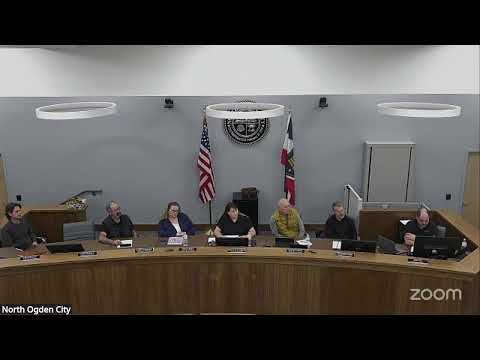
The North Ogden City Planning Commission voted unanimously to forward a proposed amendment to North Ogden Code 11-26-8 to the City Council after a lengthy public discussion about how to handle developments that currently lack access to secondary irrigation water.
Scott Hess, the city’s presenter on the item, told the commission the current code requires secondary water and obligates the city to enter a deferral agreement if secondary water is “unavailable.” He said staff’s recommended changes would replace mandatory “shall” language about deferral agreements with discretionary “may” language and add guidance on what a deferral agreement could include, such as timeframes for completion, bonding or escrow, limits on turf, xeriscape or drip-only landscape requirements, and deed restrictions limiting irrigation use.
Hess said the proposed language is meant to give the city and council discretion while providing a clear framework so that future decisions are consistent. “This code could require a developer to enter into a deferral agreement whereby the council says you cannot ever do this,” Hess told commissioners, adding that the draft lists illustrative options rather than a compulsory checklist.
During public comment, online resident Philip Swanson said he opposes using culinary (treated) water for irrigation and supported changing “shall” to “may” — or going further to “shall not” — to avoid opening a long-term drain on the city’s culinary supply. “I’m personally opposed to culinary water ever being used as secondary water,” Swanson said, arguing that allowing culinary irrigation “would significantly impact our culinary water supply down the road.”
Commissioners and staff discussed several practical alternatives and safeguards: installing dry secondary-service lines during construction, using temporary culinary-to-secondary hookups with a shared master meter for a subdivision, requiring homeowners’ associations to police irrigation restrictions, posting deed restrictions on lots, bonding or escrow to guarantee future improvements, and mandating backflow preventers to avoid contamination. Staff said the city no longer accepts conditional “will-serve” letters; utilities must provide a firm assurance that water exists and can be physically served.
Commissioner concerns centered on long-term equity and enforceability. One commissioner warned that homeowners 10 years from now could object to paying significantly more for irrigation water than other residents if ad hoc culinary irrigation becomes common. Staff cautioned that permitting culinary water for irrigation at scale could accelerate the need for capital projects (additional tanks and treatment) and potentially raise rates or require bonding.
After discussion, Commissioner Green moved and Commissioner Neighbour seconded that the commission forward the draft language (referenced as Exhibit A in staff materials) to the City Council for consideration. The motion passed unanimously.
The recommendation to council does not itself change city code; it forwards the draft with staff notes and the commission’s direction. The City Council will receive the commission’s recommendation, and staff indicated they will include clearer drafting and specific options (e.g., mandatory consideration of certain protections) for council review. The commission also flagged the need to define terms such as “available” and “unavailable” more precisely in the draft.
Next steps: the Planning Commission’s recommendation will be placed in the City Council packet for their consideration; staff said the draft will be revised to include the commission’s feedback before that meeting.