Get Full Government Meeting Transcripts, Videos, & Alerts Forever!
Get email alerts on the Housing topic
No spam. Unsubscribe anytime.
Woodside CAC signals support for limited town‑center housing, urges policy safeguards and focus on town‑owned sites
Summary
CAC members broadly favored allowing modest, well‑designed housing in the town center—typically two stories—while stressing limits imposed by small parcel sizes, ballot measures, parking and sewer access; members recommended prioritizing town‑owned parcels and zoning/policy steps before major development.
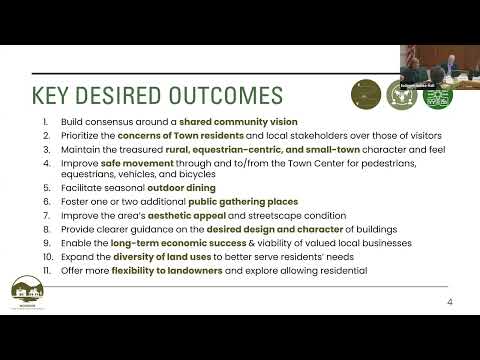
The Community Advisory Committee returned to housing near the end of its meeting and reported the results of a homework survey: a clear majority favored allowing some housing in the town center if it is carefully designed and aligned with community priorities.
Consultants said most respondents supported two‑story options and emphasized design controls, parking requirements and maintaining the town’s character. The CAC noted substantial constraints: most downtown parcels are small and already improved, ballot measures limit building heights and types, and sewer and utility access restrict where multifamily development is feasible.
Several members urged the town to prioritize parcels it controls for any pilot or demonstration housing, calling out Village Hill and other town‑owned land as places where the municipality could act without needing private owners’ buy‑in. One committee member pointed to Kinyatta College (a larger site outside the town center) as a technically feasible location the state could help assemble to meet housing obligations.
“There was general agreement that we should not force private owners but allow for appropriately designed, modestly denser housing in walkable locations,” said a CAC speaker summarizing the group’s feedback. Members recommended several policy tools: an overlay zone to enable 'missing‑middle' development (small multiplexes and accessory dwelling units), targeted zoning changes only after policy guidance, and financial feasibility study results to test whether redevelopment would be practical for small owners.
Consultants said they will run residential feasibility analysis on candidate sites and will incorporate the CAC’s guidance into the plan that will be presented to Town Council. Any changes that would enable additional housing were framed as multi-step: policy direction, possible ballot measures for changes to building limitations, zoning adjustments, then private or public redevelopment steps.
Next steps: consultants will deliver feasibility analysis and the CAC’s housing preferences to the council; further public engagement and technical study will follow before any zoning or ballot actions.