Get Full Government Meeting Transcripts, Videos, & Alerts Forever!
Get email alerts on the Land Development Code topic
No spam. Unsubscribe anytime.
San Marcos council narrows where data centers can go after hours of public protest
Summary
After more than three hours of public comment and extended debate, San Marcos City Council adopted several first‑reading amendments to its land development code that restrict data centers with new setbacks, screening and conditional‑use review while declining an outright ban. Council postponed final action on some changes and asked staff for follow‑up.
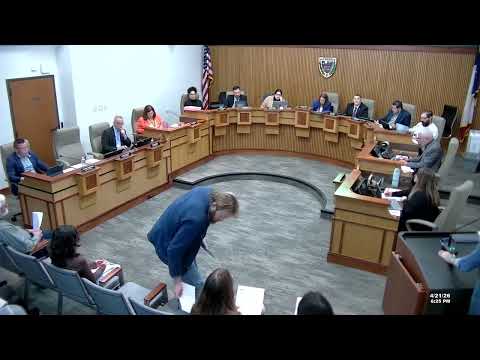
San Marcos City Council spent the bulk of its April 21 meeting responding to months of citizen opposition to a proposed rewrite of the city’s Land Development Code that would, among other things, define and regulate data centers. After hours of public testimony — much of it urging an outright ban — council members voted on a package of amendments that tighten where and how large computing facilities may be built, but stopped short of prohibiting them citywide.
Residents pressed the council during a long public‑comment period to block or severely limit data centers because of concerns about water use, power generation, noise and local environmental impacts. “We don’t trust you,” said Tori Martin, a resident who described repeated water outages near her home and urged the council to keep data centers out of business‑park zoning and to require full public review. Randall Terrell called data centers “a major policy decision,” arguing that approval should never be handed off to city staff without public hearings.
Staff presented the code rewrite as a broad package of about 325 edits to improve clarity, comply with recent state law and add several specific changes — including a new, separate land‑use line for data centers with associated use standards. Planning manager David Sto said staff proposed making data centers conditional in certain districts and permitted only in heavy industrial zones with strict buffering and screening.
Council members adopted several concrete restrictions during first reading. They added a 200‑foot setback for data‑center structures from property lines adjacent to residential uses, required transitional protective yards and aesthetic screening, and clarified that any on‑site power generation used to run a data center would trigger review as a major utility and require council‑level conditional‑use review. The council also adopted stronger language on noise measurement procedures and required that large on‑site backup generators meet Tier‑4 EPA emissions standards.
A proposal to declare data centers “not permitted” in any zoning district failed (the motion did not receive enough votes). Council members said they were balancing community concerns with the possibility of future technological changes and the city’s limited industrial land stock. Several members said they wanted to preserve a path to evaluate highly constrained projects on a case‑by‑case basis rather than a categorical ban.
Council members instructed staff to refine definitions and technical language, to add implementation language into the code where needed, and to return with updated text. Several amendments were adopted at first reading; the council left remaining issues for further refinement and set a timeline for a second reading at a future meeting.
Next steps: staff will update the land‑use matrix and the draft code text to reflect the council’s amendments, clarify the final data‑center definition and provide the council with a consolidated package for a second reading.
Ending: Council deferred some decisions and directed staff to bring a clean, consolidated ordinance back for final consideration on a future agenda. The council’s votes on the package were taken after a long night of public testimony and technical debate, reflecting continuing community engagement on the issue.