Get Full Government Meeting Transcripts, Videos, & Alerts Forever!
Get email alerts on the Education Budget topic
No spam. Unsubscribe anytime.
Bayonne board hears $223M budget proposal as residents demand clarity on PILOTs, layoffs and student services
Summary
The Bayonne Board of Education reviewed a $223,043,006 proposed 2026–27 budget that the business administrator said is driven largely by rising health benefit costs; public commenters asked for clearer explanations of a proposed tax levy increase and urged that some developer PILOT payments be redirected to schools.
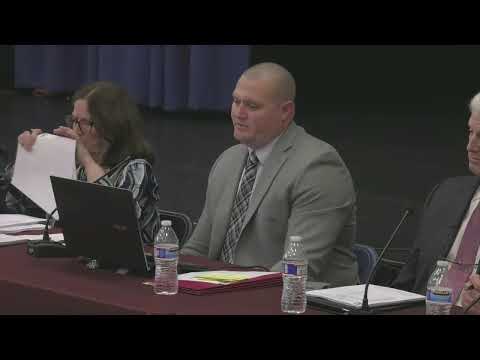
The Bayonne Board of Education on April 20 received a presentation from Business Administrator Dan Castles on a proposed $223,043,006 budget for the 2026–27 school year and heard multiple public comments urging greater transparency about a proposed tax levy increase and protections for student services.
Castles said the proposal represents an increase driven mainly by rising health costs and changing state aid. “Our total budget, proposed budget for the 2026-2027 school year, is $223,043,006, which is an increase of 12 million 12.8 million dollars,” he told the board, and said the district expects about $135 million in state aid and is proposing $85 million from the local tax levy, up from roughly $76 million currently. He added that health benefits are increasing by about $12.79 million and that, aside from that rise, the budget is “pretty much budget neutral.”
Why it matters: Castles said the district remains about $47 million below the state-calculated local fair share of $133 million, a metric he said state officials consider when distributing aid. He also noted that salary and benefits together make up roughly 82% of the district’s spending, with salaries about 59%.
Public commenters pressed the board for detail and accountability. Ward 2 resident and candidate Omar Algarhi said taxpayers “deserve full transparency” about how the levy figure was calculated and faulted city PILOT (payment in lieu of taxes) agreements that, he said, shift revenue away from schools. Algarhi proposed that “10 to 15% of pilot payments from all approved developments should go to the schools” so developers “start paying more of their fair share.”
Other residents raised related concerns. Sharon Nadrowski questioned reports of layoffs and the removal of classroom aides and warned that some students are not receiving services required by their IEPs, saying, “Some people are getting no services.” Laura Wiles, attending her first school board meeting, pointed to a calendar policy she said has produced 27 half days this year compared with 12 in 2019 and asked whether instructional time could be restored if taxpayers pay more. Several speakers, including Mina Shaffet and Keith Gallant, urged the district and city to pursue changes to PILOT arrangements rather than asking homeowners to shoulder larger tax increases.
Board action and votes: The board moved to approve superintendent report items A1 through B21; the motion carried with recorded abstentions noted in the record (Trustee Gedesky-Rodriguez abstained on A11; President Mary Jane Desmond recorded an abstention on B16 and stated she would abstain on the budget). Later, business administrator items C1 through C18 were approved; Trustee Bechet recorded an abstention, and Trustees Gedesky-Rodriguez and Gonzalez recorded a “no” vote specifically on C7 while supporting other items, but the overall motion carried.
Context and next steps: Castles highlighted an Energy Savings Improvement Plan (ESIP) the district said has saved “over a million dollars” and helped offset some costs, but he emphasized that rising benefits costs are substantially driving the proposed levy ask. The board did not adopt a final budget at the meeting; the presentation and public comment period were part of the public review process ahead of any final action. The meeting adjourned at 6:45 p.m.