Get Full Government Meeting Transcripts, Videos, & Alerts Forever!
Get email alerts on the Utility Siting topic
No spam. Unsubscribe anytime.
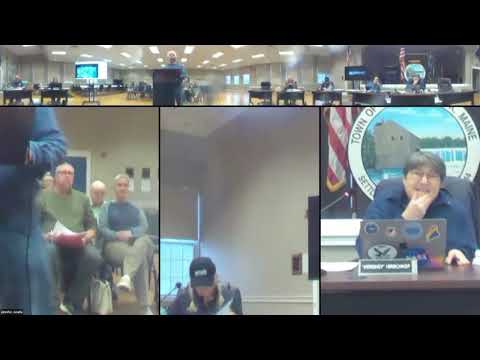
Residents urge stricter limits on large utility equipment in R1/R2; planning board pauses for technical input
Summary
Multiple residents asked the board to amend Table A to prevent large public‑utility structures (e.g., substations, large transformers) from being sited in R1/R2 residential zones; the board discussed PUC preemption, buffer setbacks, and agreed to gather technical information before proceeding.
Residents and board members debated whether Table A of the town’s land‑use ordinance unintentionally permits industrial‑scale public‑utility equipment (transformers, substations) in R1 and R2 residential zones and whether the town can draft enforceable limits.
A public commenter asked the board to adopt an amendment clarifying that Table A should not allow industrial‑type public‑utility facilities in R1/R2 and suggested the planning board and town council hold a joint public hearing. The commenter cited sections 140‑15(i) and 140‑15(n)(2), arguing those sections define R1 and industrial districts in ways that are incompatible with placing large utility structures in residential neighborhoods.
Board members acknowledged the concern but raised practical constraints: public utilities must run lines through multiple zones, and the Public Utilities Commission (PUC) may override local ordinances in some cases. Several members proposed compromise measures such as a universal buffer or setback (for example, 300 feet from a residence) to reduce neighborhood impacts while leaving utilities able to serve the town. One member suggested inviting CMP or a neutral technical expert to explain siting options and constraints.
The board agreed to pause formal action, request additional technical information and/or testimony from CMP or an independent expert, and keep the Table A amendment on the next agenda for further consideration.
Why it matters: the discussion centers on balancing essential utility service with preserving residential neighborhood character; whether or how the PUC can override local rules was raised repeatedly and remains a key unresolved policy and legal question.
Next steps: staff will attempt to secure technical testimony or materials for the board’s next meeting so the board can refine a draft amendment.