Get Full Government Meeting Transcripts, Videos, & Alerts Forever!
Get email alerts on the Public Safety Compensation topic
No spam. Unsubscribe anytime.
Mesa presents three‑year police and fire MOUs with market adjustments; city projects roughly $40M near‑term fund impact
Summary
Assistant City Manager Ken Kosts described proposed three‑year memorandums of understanding with the Mesa Police Association and United Mesa Firefighters: market adjustments (fire ~3% market plus annual 5% merits; police front‑end 3.3% and top‑out 4% with additional benchmarking through 2028) and incentive/benefit provisions; Budget Director Brian Richell said the MOUs add about $40 million pressure to forecasted general fund balances over the planning horizon.
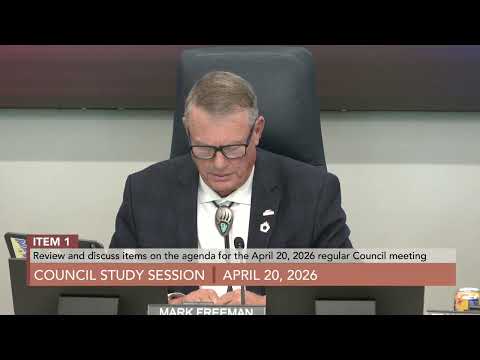
Mesa officials on April 20 outlined proposed three‑year memorandums of understanding (MOUs) with the Mesa Police Association and the United Mesa Firefighters Association that include market adjustments, annual merit steps and several incentive and benefit changes, and presented the projected budgetary impact to the city’s general fund.
Ken Kosts, an assistant city manager overseeing public safety, told council the agreements (effective July 2026–June 2029) were developed with participation from association representatives and city budget, human resources and legal staff. On the fire side, Kosts said benchmarking produced a 3% market adjustment for firefighter, engineer and captain ranks and that each of those ranks will be eligible for a 5% merit increase each year of the MOU.
For police, Kosts described a 3.3% adjustment to move officers and sergeants to market average at the front end, with a 4% top‑out adjustment for sergeants; officers and sergeants will also be eligible for 5% merit increases during the term. He said additional benchmarking will occur in spring 2027 with an effective July 1, 2028 adjustment “up to but not to exceed 3%” depending on benchmark results. Kosts highlighted patrol incentive pay, uniform allowances and special assignment pay (including aviation and drone programs) and said fitness and cancer‑screening incentives for fire personnel are retained.
Brian Richell, the city’s budget director, presented the fiscal model showing the MOUs’ effect on the general‑governmental fund. With the MOU added to the proposed budget, Richell said net sources and uses dip within the forecast—showing an approximately $40 million lower ending fund balance (from $160.9 million to $121 million) over the forecast horizon—and noted the MOU’s impact is on top of a prior public safety benchmarking adjustment (about $20 million), with a combined multi‑year impact of roughly $160 million across the forecast.
Council members thanked staff and association representatives, asked for a comparative chart showing how the five‑year forecast differs from last year’s projections, and emphasized the need to retain and support public‑safety personnel through competitive pay, wellness and peer‑support programs. Staff said they will provide the requested comparison at an April 30 budget wrap‑up meeting. No formal council action on the MOUs was recorded in the study session transcript.