Get Full Government Meeting Transcripts, Videos, & Alerts Forever!
Get email alerts on the Utilities Budget topic
No spam. Unsubscribe anytime.
Mesa energy office outlines budget, cites $600,000 hydropower savings and $164,000 gas pre‑pay gains
Summary
Energy and Sustainability Director Scott Boucher told council the department is pursuing reverse auctions and a Parker‑Davis WAPA program that has saved about $600,000, and plans a May 2026 municipal pre‑paid gas program expected to save about $164,000; John Petrov reviewed FY24‑25 results and the proposed 26‑27 energy budgets.
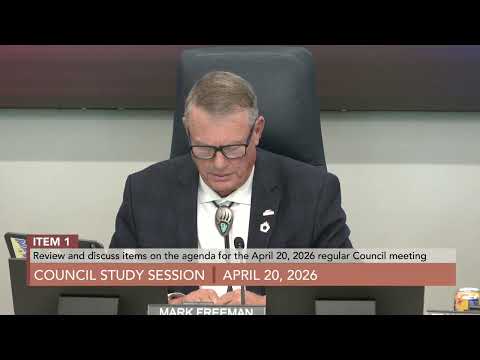
The City of Mesa’s Energy Resources Department presented a budget and operations briefing at the April 20 study session that highlighted recent procurement gains, reliability metrics and proposed budget changes for fiscal 2026‑27.
Scott Boucher, the city’s Energy and Sustainability Director, said the utility has used reverse auctions to secure short‑duration power at competitive rates—“anywhere between 20 and $90 a megawatt”—and participates in a Parker‑Davis voluntary reduction program with the Western Area Power Administration that began in July 2025 and has saved “about $600,000 so far” for customers. He also noted the city’s electric portfolio is about 57% renewable and that Mesa received recognition for reliability and safety, including APPA RP3 platinum and a 2025 certificate of excellence (top 25% nationally) for reliability.
On natural gas, Boucher described hedging with fixed‑price contracts of varying terms and said the city will join a municipal pre‑paid gas program in May 2026 that is expected to lower costs by roughly $0.10 per decatherm on base loads—“that equals out to be we’re anticipating that’s about $164,000 in savings.”
Senior fiscal analyst John Petrov reviewed fiscal results and the proposed 2026‑27 budget: FY24‑25 ended with electric O&M about $464,000 under budget and gas about $275,000 under budget; the proposed 26‑27 electric O&M budget increases by roughly $300,000 (including a periodic AMI software payment and planned merit increases) and gas O&M is proposed up about $300,000. Energy supply budgets for 26‑27 were presented at $23.3 million for electric and $16.1 million for gas, with staff noting 25‑26 estimates were lower than budget due to milder winter weather and favorable contract pricing.
Petrov also outlined targeted reductions totaling about $263,000—eliminating the college intern program ($50,000), reducing locating temps ($113,000), vacancy savings ($40,000)—and an estimated $60,000 in increased retained revenue from a 2% developer deposit change.
Council members thanked staff and asked for clearer emphasis on negotiated savings and comparative projections versus last year; staff said they would provide additional comparison charts at the April 30 budget wrap‑up meeting. Boucher and Petrov emphasized workforce training and succession planning as part of the utility’s reliability strategy.