Get Full Government Meeting Transcripts, Videos, & Alerts Forever!
Get email alerts on the Superintendent Evaluation topic
No spam. Unsubscribe anytime.
Superintendent urges five-year ‘first‑class’ vision as basis for new evaluation instrument
Summary
Superintendent Dr. Anderson told the Newberry County School District board he wants a five‑year ‘‘first‑class’’ vision to frame a redesigned superintendent evaluation, proposing profiles and staged goals for facilities, principals and staff to align district priorities.
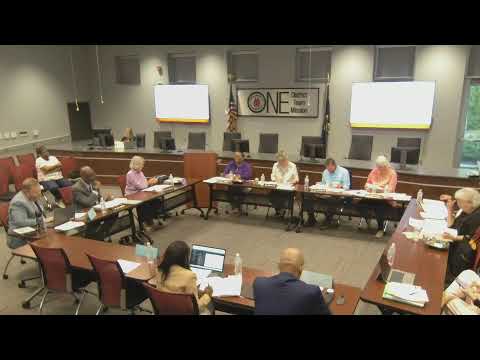
Dr. Anderson, the district’s superintendent, opened the board’s work session by urging the trustees to "start with the end in mind" when redesigning the superintendent evaluation and the district’s goals. "Every single child deserves a first class educational experience," he said, adding that the evaluation tool should be built from a clear, five‑year vision.
Dr. Anderson proposed creating profiles that define what "first class" means for facilities, principals and subgroups of employees (he used PE teachers as an example). He suggested a stepwise plan: year one create the profile; year two embed benchmarks in evaluations; years three through five develop programs, implement them and monitor progress. "If we work together," he said, "we can provide a first class educational experience for every single child every single day."
Board members pressed for alignment between any new superintendent instrument and the district strategic plan. One member said a rubric with specific descriptors and a five‑point scale (distinguished/commendable/meets expectations/needs improvement/unsatisfactory) helps set clear expectations. Several members emphasized the need for written justification when a board member assigns extreme scores on any standard so ratings are evidence‑based rather than personal impressions.
On timing, trustees discussed midyear check‑ins in addition to an annual review so progress can be monitored. Several members favored redeveloping the instrument and delaying a formal annual evaluation for the 2025–26 year until a new tool is agreed. Dr. Anderson said he values board support throughout the year and asked that, if an evaluation is used, the board be "unified" on its form and application.
The board directed staff to continue work on instrument options, share example rubrics (some trustees volunteered copies from conference materials and other districts) and to return with proposals and a plan for midyear check‑ins.