Get Full Government Meeting Transcripts, Videos, & Alerts Forever!
Get email alerts on the School Finance Training topic
No spam. Unsubscribe anytime.
Trainer tells Savannah‑Chatham County leaders school funding rests on local taxes and warns of state bills that could limit districts’ control
Summary
At a GSBA training, Dr. Steve Smith told Savannah‑Chatham County board members that local revenues and accurate coding drive most school budgets and warned that proposed state laws could shift reserve rules and expand state removal powers for boards. He urged routine financial reporting and stronger internal controls.
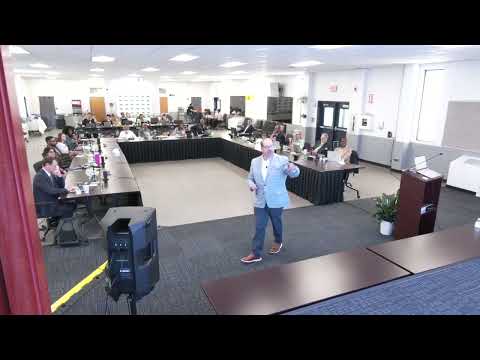
Dr. Steve Smith, a retired superintendent and trainer, told Savannah‑Chatham County board members during a required Georgia School Board Association workshop that most local school budgets are driven by local tax revenues, staffing costs and how students are coded for funding.
Smith said the district’s FY26 planning was complicated by uncertainty in the state budget and by a funding system he described as rooted in a 1985 formula known as QBE (Quality Basic Education). Drawing on state and district examples, he said local revenues — property and sales taxes, plus one-time title ad valorem vehicle taxes (TAVT) — supply a large share of operating budgets and that many modern costs (nurses, counselors, mental‑health staff, technology specialists, custodial support) are underfunded by the state formula.
Why it matters: Smith emphasized that staffing and benefits typically make up roughly 80–90% of districts’ general‑fund spending, so decisions about personnel and proper student coding (for EIP, special education and remedial programs) materially affect how much state funding a district receives. He warned that mistaken or incomplete monthly financial reports make it difficult for boards to spot drift in cash balances and to respond before problems escalate.
Smith highlighted two pending or recent state policy changes he said could matter locally. First, Senate Bill 33 (awaiting final action at the time of the workshop) would raise the statutory fund‑balance threshold from 15% to 25% of next year’s budget, a change he said was likely to increase legislative scrutiny of district reserves. Second, Senate Bill 472 — which had passed the legislature — would expand grounds under which a board could be removed if a district loses accreditation or is designated high‑risk by the state auditor. Smith cautioned that terms such as “financial mismanagement” and “misconduct” in SB472 were not narrowly defined in the bill text and could trigger broad, resource‑intensive state investigations.
On audits and controls, Smith urged boards to ask routine monthly questions: What unpaid payables are not on the open list? Are any bank accounts unreconciled for more than 60 days? When was the last independent audit started and finalized? What is the status of prior‑year audit findings and corrective actions? He said those questions can expose operational problems early and reduce the chance of emergency interventions.
Smith also walked the board through mechanics of local funding — how mills are calculated, what one mill generates in local revenue, and how local option sales taxes (SPLOST/ESPLOST) and special constitutional ELOST levies differ in allowable uses. He described how local exemptions and the state’s equalization calculations interact and why some large metro districts receive sizable equalization payments while others do not.
Quoting examples from other Georgia districts, Smith explained why districts keep reserves — to cover hurricanes, extended school building remediation (he cited a $2.1 million bat‑remediation example) and other emergent costs not covered by insurance. He recommended documenting assigned and committed fund balances so the board can clearly explain reserves to legislators and the public.
Smith repeatedly urged clear monthly financial reporting and strong separation of duties in the finance office. He said poor reconciling practices, delayed audits, or incomplete payable listings were recurring causes of fiscal crises in the state’s recent high‑risk districts.
The workshop closed with Smith offering follow‑up help and contact information for district staff. He said boards are their own best advocates at the state capital and encouraged members to make regular, factual reports to legislators about district needs.
Sources: Presentation and Q&A led by Dr. Steve Smith at the Savannah‑Chatham County GSBA training (trainer remarks and examples).