Get Full Government Meeting Transcripts, Videos, & Alerts Forever!
Get email alerts on the Open Meetings topic
No spam. Unsubscribe anytime.
Commission receives Brown Act training, warned about 'daisy‑chain' contacts and social media pitfalls
Summary
A presenter led Gilroy Parks and Recreation commissioners through California open‑meeting rules, warning that serial contacts (the so‑called 'daisy chain' or 'hub‑and‑spoke') and informal online discussions can create Brown Act violations and advising commissioners to consult staff or the city attorney when unsure.
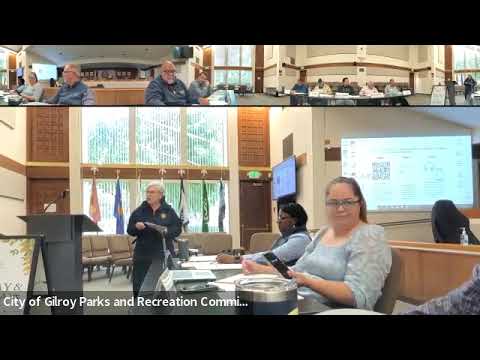
A presenter gave a Brown Act training to the Gilroy Parks and Recreation Commission that emphasized legal and perceptual risks of conducting public business outside noticed meetings.
The presenter told commissioners that California’s open‑meeting law requires local decision‑making to occur in public and cautioned that informal chains of communication can amount to a meeting. "One person reaches out to every commissioner in another way... so there's various ways to get to the same point," the presenter said, describing the so‑called "daisy chain" and "hub‑and‑spoke" scenarios as common pitfalls.
The training covered electronic communications, social media and public records. The presenter recommended avoiding reply‑all email threads that could create an evidentiary trail, suggested blind‑copying where appropriate, and advised commissioners that social media exchanges should not convey deliberation or a commission position. "Members may use social media to answer questions," the presenter said, "just don't convey positions that should be conducted here." The presenter also noted that many communications are public records and could be subject to public records requests.
Commissioners asked practical questions about attending community events, sitting together at breakfasts or chamber meetings, and participating in vendor tables. The presenter said attendance at public, noticed events is generally allowed but cautioned that a quorum gathering at an event or repeated private discussions could create the appearance of a meeting. He recommended forming ad hoc subcommittees when commissioners need to collaborate outside a regular meeting.
Staff urged commissioners to ask questions and consult the city attorney or staff if unsure about specific interactions. The presenter said remedies for Brown Act violations range from redoing an action to rare civil suits or misdemeanor charges in extreme cases, though those are uncommon.
The training concluded with staff offering to meet individually with commissioners who want clarification. The session was framed as precautionary: follow the law and avoid perceptions of secret deliberation while remaining engaged with the community.