Get Full Government Meeting Transcripts, Videos, & Alerts Forever!
Get email alerts on the Land Use topic
No spam. Unsubscribe anytime.
Millard County approves rezoning of 640 acres for aggregate operation and co-located concrete batch plant
Summary
The Millard County Commission approved a zoning change for roughly 640 acres near 11,000 North 400 West in Holden to Heavy Industrial to allow aggregate extraction and a co-located concrete batch plant; the commission required future conditional-use reviews for hauling routes, water documentation and road impacts.
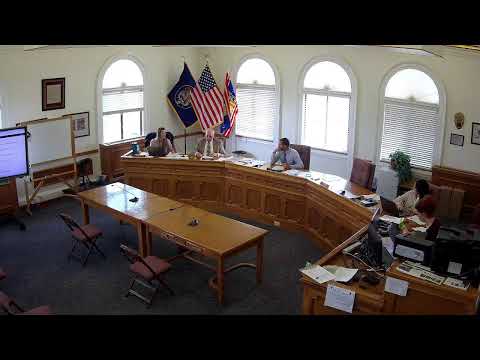
The Millard County Commission voted to rezone about 640 acres near 11,000 North 400 West in the Holden area from Agricultural to Heavy Industrial to allow aggregate extraction and a co-located concrete batch plant.
Applicant Todd Cusk, owner of CMC, and project manager Taylor Larson told the commission the site contains a high-quality rock-and-sand deposit. Cusk cited an existing state geologic assessment that labels the deposit QAF1 and estimates about 60 feet of aggregate beneath much of the parcel; the team said their tests to 30 feet encountered rock and sand that would support dry aggregate production and concrete batching.
The applicants said colocating washing and batching at the site would reduce truck traffic compared with moving raw material between separate facilities. They also said an agreement with a nearby project will supply water for processing and that power generation plans are in place. Property owners Mark and Dane Stevenson attended and described historical difficulties farming the rocky land.
Neighbors and several commissioners pressed the applicants on hauling routes, road wear and who would pay for repairs. Commissioners asked for documentation of any water-sharing agreements and said specific conditions on haul routes, dust control and road repairs will be enforced through the conditional-use permitting process that follows a successful zone change. The applicants told the commission they would supply road-building materials if repairs are needed and that they are willing to coordinate with county road staff.
Commissioners emphasized process: the current action changes the zoning designation to allow industrial uses in principle; separate land-use reviews — including a conditional-use permit and planning-and-zoning review — remain required to set operating conditions and mitigation measures.
The commission adopted the ordinance authorizing the zoning change. A roll call was called at the time of adoption; the transcript records Commissioners Wright and Johnson voting “yes.” The full roll-call tally was not clearly recorded in the available transcript; staff said the conditional-use application will return with technical details on haul routes, water documentation and road-mitigation plans.
Next steps: the applicants must submit a conditional-use permit with technical materials (haul-route plans, water-use documentation, and road impacts/specifications) for planning-and-zoning review and a subsequent commission decision. The commission instructed staff to ensure documentation of any water agreements is provided as part of that review.