Get Full Government Meeting Transcripts, Videos, & Alerts Forever!
Get email alerts on the Municipal Budget topic
No spam. Unsubscribe anytime.
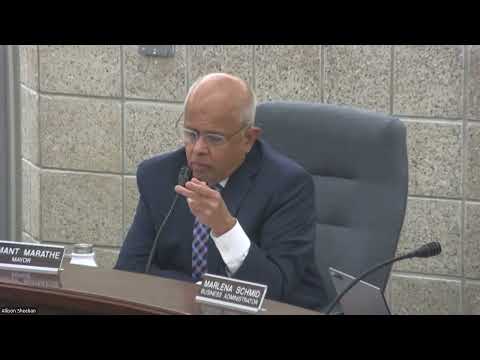
West Windsor mayor outlines 2026 budget with 3.4' municipal tax increase; total local impact about $58 a month
Summary
The West Windsor mayor presented the township—s 2026 budget, announcing a 3.4' municipal tax increase, a 7.8' school increase and a preliminary 2.2' county component, estimating roughly $705.23 more per year (about $58 monthly). He cited rising health and personnel costs, permit-fee revenue declines ahead, and an $800,000 university contribution as offsetting revenue.
The mayor presented West Windsor—s 2026 budget on May 14, saying the municipal tax rate will rise by 3.4' while the school levy increases 7.8' and the county component stood at about 2.2' but was not final.
"These are the 2026 tax increases. The municipal tax increase is 3.4'. The school tax increase is 7.8'," the mayor said, and added the combined effect equates to "about $705.23 or about $58 a month." The mayor emphasized that the council adopted the budget as presented, meaning no amendments were made at approval.
He described how the tax rate is calculated, saying the township will collect $28,550,275 in taxes this year and that figure is divided by total assessed value (which he said is a little over $6,000,000,000) to produce the rate residents use to compute their bills.
The mayor pinpointed several cost drivers behind the increase: group health insurance costs rose about 36% and salary-and-wage costs rose roughly 37%, partly because last year—s hires (he listed seven new positions: two police officers, two EMTs, two public works employees and one fire engineer) are now budgeted at a full year of salary. He also described contract costs for refuse and recycling rising (he cited roughly 5% annual increases for refuse and 7.5% for recycling) and noted state caps on appropriations constrain shifting funds across lines.
On revenues, the mayor said much of the township—s reserve growth over his tenure came from construction-related permit (UCC) fees and rollback taxes. He said UCC fees rose from roughly $2 million in 2017 to about $4.82 million in the most recent budget year, with a historical high near $5.773 million in 2024. He also said a negotiated agreement with Princeton University has become a material revenue source: earlier payments were under $80,000, he said, and a later contract provided about $800,000 unrestricted with 4% annual increases.
"We did generate...500,000 extra income because the interest rates were high," the mayor said, noting that investment income has helped but is expected to fall if interest rates decline. He added that the township generally must invest conservatively and cannot buy treasury bills or stocks.
The mayor reported the reserve fund balance was $1,974,000 when he took office and said it is expected to be roughly $10,000,000 in 2025, with a projected year-end balance for the coming fiscal year of about $8,325,000; he warned reserves will decline as revenue sources moderate and costs rise.
He criticized the level of state aid, saying the state contribution to the municipal budget is small (he gave a figure of 3.84%) and urged residents to contact state legislators to press for increased aid. He also said state-driven higher-density development requirements will increase demands on public safety and emergency services as the township grows (he estimated the population near 34,000).
The mayor closed by reiterating the administration—s intent to limit hiring in the current budget and to rely on reserves and negotiated revenue sources to smooth the transition to tighter years, then turned the presentation to John for the detailed numbers. John asked staff to provide a copy of the presentation.