Get Full Government Meeting Transcripts, Videos, & Alerts Forever!
Get email alerts on the Behavioral Health topic
No spam. Unsubscribe anytime.
Washoe County officials cite falling fentanyl deaths, urge ‘‘stay the course’’ on diversion and housing investments
Summary
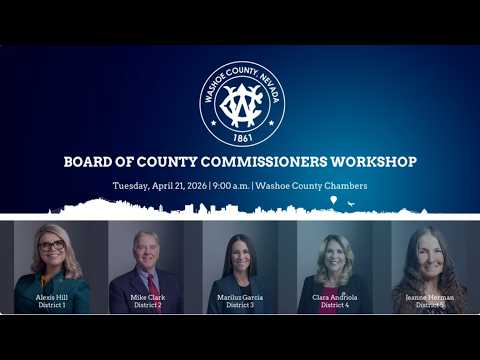
At an April 21 strategic workshop, the county’s medical examiner reported a post‑2023 decline in drug‑related deaths while officials highlighted diversion programs, a new permanent supportive housing program and jail‑based mental health services as drivers of improved outcomes.
Washoe County leaders on April 21 described encouraging local trends in drug‑related deaths and argued the county should continue investing in diversion, housing and coordinated services to sustain those gains.
Dr. Laura Knight, the county medical examiner, presented Washoe‑only mortality data showing drug‑related deaths rose for several years and peaked in 2023, with fentanyl a principal driver. “All of the data that I’m presenting right now is Washoe County only,” she said, adding that while fentanyl drove the recent peak, stimulants — particularly methamphetamine — have remained an important contributor to deaths in the county.
Why it matters: Officials said the numbers suggest current prevention and treatment programs are having an effect but warned the decline could reverse if investments are cut. County staff repeatedly framed the workshop as a chance to think upstream — preventing crises rather than responding to them.
What officials told the board: Assistant County Manager Ryan Gusson summarized prevention and diversion efforts across the county, citing a set of measurable results. Since investments began in 2018, he said, the county has seen a 35% reduction in the number of children in county custody and a 94% reduction in hospitalizations for children served by the county’s children’s mobile crisis team. Gusson credited clinical teams, juvenile services diversion work, and mobile crisis response for those reductions.
Gusson also highlighted housing outcomes as central to diversion: county case managers and behavioral health teams facilitated 827 exits to permanent housing in 2025, and the sheriff’s HOPE team housed an additional 177 people. A new permanent supportive housing (PSH) program on the CARES campus opened for 50 units; as of the workshop staff reported 42 of the 50 units filled.
Law enforcement and courts: Assistant Sheriff Johnston described efforts to intercept drug trafficking along Interstate 80 and the increasing role of license‑plate reader technology and analysts. Chief Judge Egan Walker credited cross‑system coordination for big reductions in recidivism and said human capital — case managers, deputies, court clerks and care workers — is the system’s most important asset. “What you have in abundance is people,” Walker said, urging the board to keep funding proven programs rather than only build new ones.
Program outcomes tied to public safety and jail use: Officials reported that mobile outreach teams responded to 1,187 calls last year with only 8% resulting in transport to jail or emergency rooms. Treatment and specialty court programs saw 432 successful program completions; diversion, housing and treatment programs were associated with a reported 93% reduction in arrests among housed, diverted individuals. Inside the jail, a jail‑based mental health unit has reduced days in custody for participating people by about 40% and medication‑assisted treatment (MAT) reduced recidivism by 36%.
Board questions and clarifications: Commissioners pressed for context and limits. Dr. Knight said national patterns show opioid/fentanyl declines are more advanced in some regions, and she noted the county has lagged those changes in timing. Commissioners also raised gaps: insufficient community treatment beds, persistent foster‑care staffing shortfalls (staff reported a 53% decline in foster providers after COVID with only a modest recovery), and case management capacity to sustain housing exits.
On the CARES campus client origin question, staff clarified that about 600 people entered county programs in the most recent quarter and roughly 15–16% were from outside Washoe County; the large majority (about 85%) were Washoe residents.
What’s next: County staff and the board framed these results as evidence to “stay the course” — maintain staffing, housing investments and cross‑system programs — while continuing to pursue more beds, foster‑care supports and data improvements. The county plans follow‑up strategic workshops on May 19 (growth, housing, infrastructure) and June 2 (operations and risk).