Get Full Government Meeting Transcripts, Videos, & Alerts Forever!
Get email alerts on the Public Safety topic
No spam. Unsubscribe anytime.
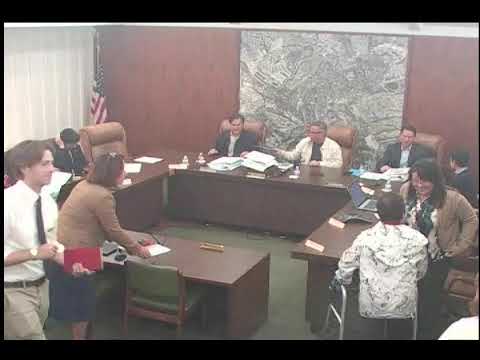
Planning commission reapproves large Spur Lane rebuild after lengthy technical review amid neighbors' landslide and drainage concerns
Summary
The commission reapproved Zoning Case 26-37 for a new ~5,535 sq ft residence, pool and extensive grading on Spur Lane despite multiple neighbors warning construction could worsen local landslide/ drainage problems; staff and project engineers said county geotechnical reviews and mitigation — including a proposed 12,000 cu ft storage tank — address runoff concerns.
The Rolling Hills Estates Planning Commission voted to reapprove zoning case 26-37, clearing the way for demolition of an existing house, expansion of the building pad, construction of a new roughly 5,535-square-foot residence with an attached garage and pool, and significant grading and retaining walls on Spur Lane, subject to the conditions in the adopted resolution and required county approvals.
Raina, the contract senior planner presenting the item, described the request as a denovo review after the project’s prior entitlement lapsed. Staff reported the lot is an irregular parcel in an area affected by prior land movement; the plans request non-exempt grading of roughly 4,750 cubic yards and a variance to exceed the municipal 40% disturbance threshold (the submittal projects about 63% disturbed area). Staff recommended opening the public hearing and reviewing public testimony; a resolution for reapproval was included for commission consideration.
Project architect Luis de Morice and civil engineer Dan Bolton explained delays that followed the project’s 2024 approval, including additional geotechnical borings and county GMAD review after regional landslide activity. Bolton said the team recalculated runoff (an additional 668 cubic feet for the proposed improvements) and proposed a 12,000-cubic-foot storage tank to ensure there is no net increase in runoff. He said geotechnical reports and county soils/geology reviews have been completed or are near completion for key elements (retaining walls, pool), and that septic/system approvals remained pending.
Multiple residents told the commission they feared new construction and larger disturbed areas would increase runoff and aggravate a regional land-movement complex (citing Portuguese/Ishabishi canyons and toe instability). Alfred Visco and James Bellis urged a moratorium or that the city require third-party slope-stability analysis paid by the applicant. Melissa McNab and others said approved drainage changes — including an inlet on Spur Lane and a pipe that would convey water down the slope — could concentrate runoff toward downstream yards and infrastructure. Several neighbors described observed foundation cracking, water main breaks and ongoing property damage.
Dan Bolton said the technical team worked with GMAD and the county geotechnical reviewers, noted additional borings and responses to comments, and said the approved geotechnical and geology reports reflect the most recent land movement and that several technical measures (soldier piles, controlled conveyance of runoff, the proposed storage tank) improved site safety. He stated, "we're proposing a storage tank of 12,000 cubic feet to make sure that there's no increase in runoff relative to the existing conditions." Luis de Morice and the applicant emphasized cost and delay burdens the owner has already incurred through required borings and plan checks.
Staff clarified that county approvals for geotechnical, grading and utilities remain required before permits can be issued; the commission’s action would reauthorize the entitlements while leaving technical clearances with the county and utilities. Commissioners discussed whether material facts had changed since the earlier approval, the thoroughness of county review, and the scale of neighbors' concerns. Several commissioners said they must rely on county technical expertise.
By motion (the motion was amended and the commission referenced resolution numbers in discussion), the commission adopted the resolution to reapprove Zoning Case 26-37 with the conditions identified in staff’s report and subject to completion of the required county and utility approvals. The recorded roll call showed the commissioners present voting to approve.