Get Full Government Meeting Transcripts, Videos, & Alerts Forever!
Get email alerts on the Emergency Medical Services topic
No spam. Unsubscribe anytime.
Regional EMS director warns of higher risks after local hospitals cut obstetrics services
Summary
A regional EMS medical director told the City of Stuart commission that recent local hospital OB closures increase the risk of out‑of‑hospital births and urged steps — training, dedicated transport teams and upgraded neonatal equipment — to reduce perinatal harm.
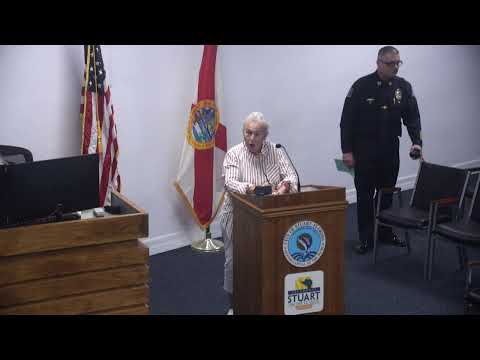
Dr. Kenneth Shepki, the 911 medical director who covers multiple counties, told the City of Stuart commission on April 13 that the loss of obstetrics services at nearby hospitals has changed how emergency medical services must decide where to take pregnant patients. Shepki said national guidance treats "imminent delivery" — signs such as an urge to push or contractions less than two minutes apart — as a medical-emergency indicator that justifies stopping at the nearest hospital.
Why it matters: With Cleveland Clinic North and another local hospital no longer offering routine OB care, some patients face longer drives to OB-capable hospitals. Shepki cited evidence that unplanned out‑of‑hospital deliveries carry two to three times greater perinatal risk and that hypothermia and other complications are common when births occur during transport.
What he presented: Shepki summarized four local incidents raised in county discussions (cases from January and February 2026 and September 2025 among them), explained national EMS thresholds for imminent delivery, and reviewed the legal context, including the Emergency Medical Treatment and Labor Act (EMTALA), which restricts transfers of women in active labor unless specific stabilization criteria are met. He also walked through transport-time considerations and why certain non‑emergency transfers should use hospital transport resources rather than 911 units.
Recommended changes: Shepki offered six evidence-based system improvements to reduce risk, including rotating emergency‑department staff through labor-and‑delivery to maintain skills, placing dedicated labor-and‑delivery nurses or nurse‑midwives in emergency departments that now receive laboring patients, creating a specialized interfacility neonatal transport team equipped with warmers and neonatal resuscitation gear, and improving coordinated protocols between EMS, county fire rescue and hospital medical directors.
Responses and next steps: Commissioners thanked Shepki and asked him to share his six recommendations with hospital medical directors and county EMS leaders; he said meetings with Cleveland Clinic and Martin County Fire Rescue were already planned. Mayor Christopher Collins and others asked staff to consider whether special joint meetings should be scheduled to align local policy with nationally recognized standards. Shepki said he would continue to review individual cases and provide follow-up to the commission.
At the meeting Shepki said, "Is it safer to deliver a baby in an ambulance on the way to an OB hospital or in the back of an ambulance?" and urged the commission to weigh national data showing higher morbidity for out‑of‑hospital deliveries when decisions are not guided by clinical imminence criteria. The commission did not take formal action but asked for continued coordination and feedback from regional partners.